




A New Trade Era
In a significant development for international commerce, India and the United States have inked a pivotal trade agreement that promises to reshape trade landscapes,
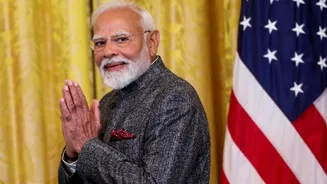
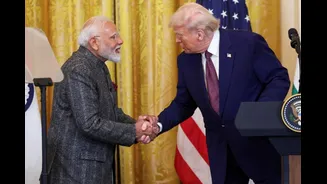
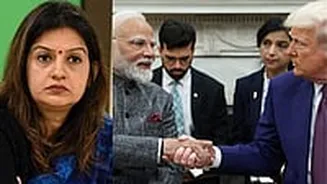
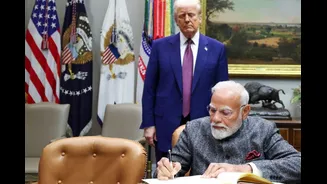
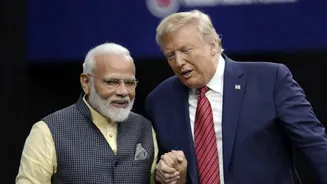
particularly for India. This accord, announced by US President Donald Trump following a discussion with Indian Prime Minister Narendra Modi, is characterized by a substantial reduction in tariffs imposed by Washington on goods originating from India. Specifically, the tariff rate will be slashed from a considerable 50 percent down to a much more manageable 18 percent. This strategic shift is a direct result of India's commitment to halt its purchases of Russian oil and to further lower existing trade barriers. Prime Minister Modi expressed his enthusiasm, highlighting that this development would be a boon for "Made in India" products, anticipating a significant boost in their competitiveness on the global stage. He further elaborated that the collaboration between these two major economies, often referred to as the world's largest democracies, would foster mutual benefits and unlock a wealth of opportunities for cooperative ventures that serve both nations' interests. The agreement signifies a new chapter in bilateral trade relations, fostering greater economic synergy and cooperation.
Competitive Tariff Landscape
With the recent US-India trade pact now in effect, India finds itself in a considerably advantageous position when compared to other prominent Asian economies engaged in trade with the United States. Under this new arrangement, India now faces one of the lowest tariff rates from the Donald Trump administration. This contrasts sharply with the tariffs imposed on nations such as China, Pakistan, Indonesia, Bangladesh, and Vietnam. While India's new tariff rate of 18 percent is indeed favorable, it is important to note that the US maintains slightly lower tariffs for its European partners, as well as for trade with Japan and South Korea. However, the leap forward for India is undeniable when looking at other nations. For instance, Brazil faces a substantial 50 percent tariff, while Myanmar and Laos are subject to 40 percent. China's tariffs stand at 37 percent, and South Africa's at 30 percent. Within Southeast Asia, countries like Vietnam and Bangladesh are still dealing with 20 percent tariffs, followed closely by Pakistan, Malaysia, Cambodia, and Thailand, all facing 19 percent tariffs. This disparity clearly illustrates the preferential treatment India is now receiving, offering its exporters a significant edge in the American market.
Key Deal Terms
Delving into the specifics of the recently established India-US trade agreement reveals several key commitments from both sides. According to reports, a significant component of the deal involves the United States rescinding a previous 25 percent punitive duty that was levied on all imports from India. This duty had been imposed due to India's purchases of Russian oil and was in addition to a pre-existing 25 percent "reciprocal" tariff rate. In return for these tariff reductions, Prime Minister Modi has reportedly committed India to substantially increasing its purchases of American products, a concept often referred to as "BUY AMERICAN" at a much higher volume. Specifically, India is expected to procure over $500 billion worth of US energy resources, including coal, alongside other goods such as technology, agricultural products, and various other items. President Trump indicated that India would also undertake measures to eliminate its own tariffs and non-tariff barriers against the United States, aiming to bring them down to zero. This reciprocal approach underscores the intention to create a more balanced and open trade environment between the two nations, moving away from previous protectionist measures that had impacted bilateral trade.
Lingering Questions
Despite the public announcement of the significant trade development between India and the United States, several crucial details remain conspicuously absent. President Trump's statement on social media, while enthusiastic, offered a rather sparse outline of the agreement's specifics. Key information such as the exact commencement date for the newly reduced tariff rates is yet to be disclosed. Furthermore, there is no clear timeline provided for when India is expected to cease its purchases of Russian oil, nor are the precise mechanisms for reducing trade barriers clearly defined. The list of specific US products that India has committed to buying also lacks detail. As of the latest reports, the White House has not yet issued any official presidential proclamations or Federal Register notices, which are typically required to formalize such trade policy changes. Neither the Indian nor the US government has released any comprehensive details regarding the terms of the deal or its effective date. The absence of statements from Russia on the matter of India's supposed halt in Russian oil imports also adds to the ambiguity. Unlike previous trade agreements with major Asian partners like Japan and South Korea, which often involved substantial investment commitments into US industries, the India announcement made no mention of any specific investment figures, leaving a significant gap in understanding the full scope of the agreement.