








AI's Expanding Role
Artificial intelligence is steadily advancing within the medical field, promising significant enhancements in how diseases are identified, treatments are developed,
and patients are cared for. Its applications are diverse, ranging from sophisticated algorithms adept at analyzing medical images, thereby potentially detecting conditions like cancer or diabetic retinopathy earlier than the human eye, to predictive systems that can pinpoint individuals at a heightened risk for developing certain ailments or experiencing adverse health events. Furthermore, AI-powered chatbots are now being utilized for preliminary patient consultations, symptom assessment, and disseminating health-related information, thereby alleviating some of the workload from healthcare practitioners. The realm of drug discovery and development is also witnessing a profound impact, with AI capable of sifting through immense volumes of biological and chemical data to pinpoint potential drug candidates far more rapidly than conventional methodologies. This accelerated process can significantly expedite the creation of life-saving pharmaceuticals, marking a pivotal moment in medical research and innovation.
Personalized Medicine & Diagnostics
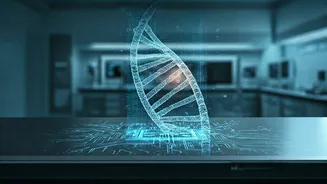
AI's influence extends into the domain of personalized medicine, where therapeutic strategies are meticulously tailored to an individual's unique genetic makeup, lifestyle, and environmental factors. By dissecting a patient's specific data, AI systems can forecast their likely responses to various treatments, thereby optimizing therapeutic outcomes and minimizing the occurrence of undesirable side effects. In diagnostics, particularly in fields like ophthalmology, AI shows immense promise. For instance, its capabilities in identifying age-related macular degeneration and diabetic retinopathy are considered highly promising. Moreover, AI is actively employed in eye surgeries, such as cataract and retina procedures, to precisely manage intraocular pressure, thereby reducing the likelihood of complications. Beyond diagnostics, AI is also proving valuable in hospital administration for tasks like scheduling appointments and directing patients to specialized consultants, streamlining operational efficiency within healthcare facilities.
The Irreplaceable Human Touch
Despite the remarkable advancements in AI capabilities, the human element in healthcare remains utterly indispensable. Renowned cardiologists like Dr. S.D. Motghare highlight that while AI can process vast datasets and identify patterns with precision, it fundamentally lacks the empathy, profound understanding, and nuanced judgment that an experienced human physician brings to patient interactions. He articulates that AI can furnish data-driven insights but cannot replicate the essential human connection, the capacity to discern subtle meanings within a patient's narrative, or the complex ethical considerations that underpin medical decision-making. Leading oncologists like Dr. Anjali Deshpande concur, explaining that clinical intuition is forged through a deep reservoir of experience, diligent observation, and a comprehensive grasp of human physiology and psychology. This intuition empowers doctors to navigate situations where data might be incomplete or ambiguous, making informed choices. AI, in this context, is viewed as a potent tool and an invaluable assistant, but not as a substitute for a doctor's discerning judgment and ultimate responsibility.
Challenges and Ethical Frontiers
The increasing integration of AI in healthcare is not without its complexities and challenges. Significant concerns revolve around the ethical implications, including the paramount importance of data privacy, the potential for algorithmic bias that could disadvantage certain patient groups, and establishing clear lines of accountability in the event of errors. Robust regulatory frameworks are essential to ensure that AI systems deployed in healthcare are equitable, transparent, and secure. Furthermore, the widespread adoption of AI faces practical hurdles such as the substantial cost associated with implementation, the necessity for extensive training programs for healthcare professionals to effectively utilize these new tools, and the intricate process of integrating AI systems with existing hospital infrastructure. Obtaining regulatory approvals for AI-driven medical devices and software can also be a protracted and demanding undertaking, slowing down the pace of innovation.
AI for Repetitive Tasks
Presently, many medical practitioners find AI to be most beneficial in handling simpler, more repetitive tasks that can be time-consuming for humans. For example, clinicians can leverage AI to generate discharge summaries for patients who have had lengthy hospital stays or to assist with ICD coding, a process that assigns standardized codes to diagnoses for record-keeping and billing. AI is also being considered for preparing summaries when patients are transferred from intensive care units, streamlining documentation and boosting overall efficiency. Intensivists emphasize the critical role of backend software in managing patient records and clinical documentation, noting that AI integration into these systems can significantly reduce administrative burdens and enhance efficiency in routine medical duties. This allows healthcare professionals to focus more on direct patient care rather than administrative overhead, a key benefit in resource-limited settings or when manpower is stretched thin. While AI can automate these tasks, ensuring standardization and accuracy is crucial to avoid the pitfalls of faulty or misleading reports.