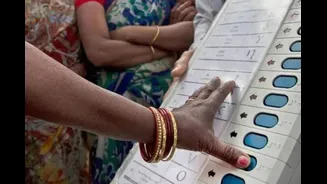







Election Numbers Decoded
The Tamil Nadu Assembly elections presented a complex electoral landscape, with 234 seats up for grabs. The focus of 'The Numbers Game' was to dissect
the electoral trends and potential outcomes digit by digit, offering an in-depth analysis of this closely fought political battle. Every number, trend, and on-ground report was meticulously examined live to provide viewers with the most insightful understanding of the election dynamics. This analytical approach aimed to go beyond surface-level reporting, delving into the statistical underpinnings that could shape the final results and reveal the true pulse of the electorate.
The Vijay Factor
A significant point of discussion revolved around the electoral impact of actor Vijay's political entry. The analysis explored whether his party's influence was a genuine game-changer or merely a hyped phenomenon. Different scenarios were presented to illustrate how Vijay's potential vote share could significantly alter the electoral fortunes of the dominant Dravida Munnetra Kazhagam (DMK) and the All India Anna Dravida Munnetra Kazhagam (AIADMK). The core of this analysis was to quantify the tangible effects of Vijay's participation, moving beyond speculative claims to a data-driven assessment of his potential to sway voters and influence the final seat distribution, thus impacting the overall election narrative.
Vote Share Scenarios
The program meticulously outlined hypothetical vote share distributions stemming from Vijay's potential support. One scenario suggested that if Vijay's party secured 12% of the total vote, and a substantial 8% of that came from the DMK's traditional voter base, with only 2% from the AIADMK, the AIADMK would emerge stronger. In this specific projection, the AIADMK could potentially gain the lead with 127 seats compared to the DMK's 107, demonstrating a critical shift in power attributed directly to the reallocation of votes influenced by Vijay's presence. This scenario highlighted how a seemingly small percentage of transferred votes could dramatically flip the election outcome.
Minimum Electoral Relevance
For Vijay's political endeavor to be considered electorally relevant, a minimum threshold of 8% of the overall vote share was identified. Anything less than this benchmark was deemed insufficient, rendering him an 'also-ran' akin to a previous instance where significant noise around a political figure yielded no substantial electoral impact. This analysis stressed that achieving at least 8% of the vote was crucial for Vijay's party to have any meaningful influence on the election results, distinguishing between mere participation and actual electoral consequence. The conversation emphasized that crossing this 8% mark was the key to moving from speculative interest to tangible political force.