








Tariffs Trigger Turmoil
The financial markets worldwide experienced a negative response following the announcement of new tariffs by former US President Donald Trump. Specifically,
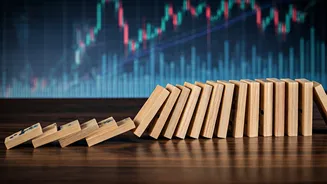
the news led to a downturn in Asian and European markets, as investors adjusted their positions in anticipation of potential economic effects. US stock futures also saw a decline, signalling potential instability in the American market as well. These developments highlight the interconnected nature of global markets and the impact of trade policies on financial health across different regions. The announcement had a ripple effect, causing immediate reactions and prompting a reevaluation of investment strategies among market participants.
Market Reactions Summarized
In response to the tariff announcements, several key market indices displayed negative trends. The Nifty50 and BSE Sensex, key indicators of the Indian stock market, were trading in the red, reflecting a cautious sentiment among Indian investors. Simultaneously, European and Asian markets also experienced declines. These downward movements suggest a broad unease within the global financial system, where the imposition of tariffs has been interpreted as a risk factor. The futures market showed a decrease in values, reflecting speculation about future market performance. This situation indicates that the implementation of tariffs is influencing market behaviour across multiple geographic areas.
Global Market Impact
The recent tariff announcements by Donald Trump have had a noticeable effect on the global economic environment. European Union leaders scheduled meetings to discuss the implications of the tariffs on the economy. These meetings show an attempt to formulate a unified response to protect economic interests. The broader effect goes beyond the initial financial market reactions, affecting international trade relationships and business strategies. This situation creates a context for adjustments in the global economy. The volatility underscores how trade policies directly impact the stability of markets and the necessity of coordinated global responses.
Indian Market's Response
The Indian stock market's reaction to the new tariffs was evident through the movement of key indices like Nifty50 and BSE Sensex. These benchmarks demonstrated a decline, signalling a sentiment of concern among investors operating in the Indian market. Such responses highlight how India, as a major player in the global economy, is affected by worldwide economic events. Investors appeared cautious, reassessing their investment strategies in reaction to the uncertainties brought about by trade restrictions. The impact on the Indian market serves as a practical example of how international trade policies can immediately influence national financial health.
Future Implications Unfold
The long-term effects of the new tariffs, imposed by Donald Trump, are starting to become apparent. Analysts are studying how these trade measures will impact global trade patterns, specifically looking at sectors that could be most affected by the tariffs. These include manufacturing, technology, and various other sectors. The implications extend to the potential for shifts in global supply chains as companies try to mitigate the negative effects of higher tariffs. These movements suggest a period of adaptation and reassessment for businesses. These trade measures have the potential to reshape international trade dynamics.