





Sarvam AI's Ambitious Launches
Indian AI startup Sarvam AI made significant waves during the AI Impact Summit 2026, embarking on a 14-day product announcement spree. Notably, they unveiled
Sarvam Edge, a suite of on-device AI models designed for critical tasks such as speech recognition, synthesis, translation, and document digitization, promising enhanced privacy and efficiency. The company also showcased advancements in its text-to-speech model, Bulbul V3, with improved natural speech generation across diverse Indian regions, scripts, and accents. Further innovations included Sarvam Vision, a 3-billion-parameter vision-language model adept at image captioning, scene text recognition, and complex data interpretation. Sarvam Samvaad introduced conversational AI agents for enterprise integration, while Sarvam Audio expanded their 3-billion-parameter language model with 22 Indian languages. The Sarvam Dub model demonstrated impressive capabilities in AI-powered dubbing with zero-shot voice cloning and cross-lingual support, facilitating content creation in multiple Indian languages. These developments underscore Sarvam AI's commitment to developing a comprehensive AI ecosystem tailored for India.
Economic Imperatives for AI
Chief Economic Advisor V. Anantha Nageswaran emphasized that AI adoption in India must be a deliberate process, meticulously aligned with ensuring widespread employability. He articulated that successful integration necessitates a robust educational foundation, the cultivation of high-quality skills, and the expansion of labor-intensive service sectors, alongside the removal of regulatory hurdles. Nageswaran stressed the crucial role of collaboration among private entities, academic institutions, and policymakers. He expressed optimism that with strategic foresight, institutional discipline, and unwavering execution, India possesses the potential to become a global pioneer in achieving genuine human abundance through AI, as reported by PTI.
India Showcases Sovereign LLMs
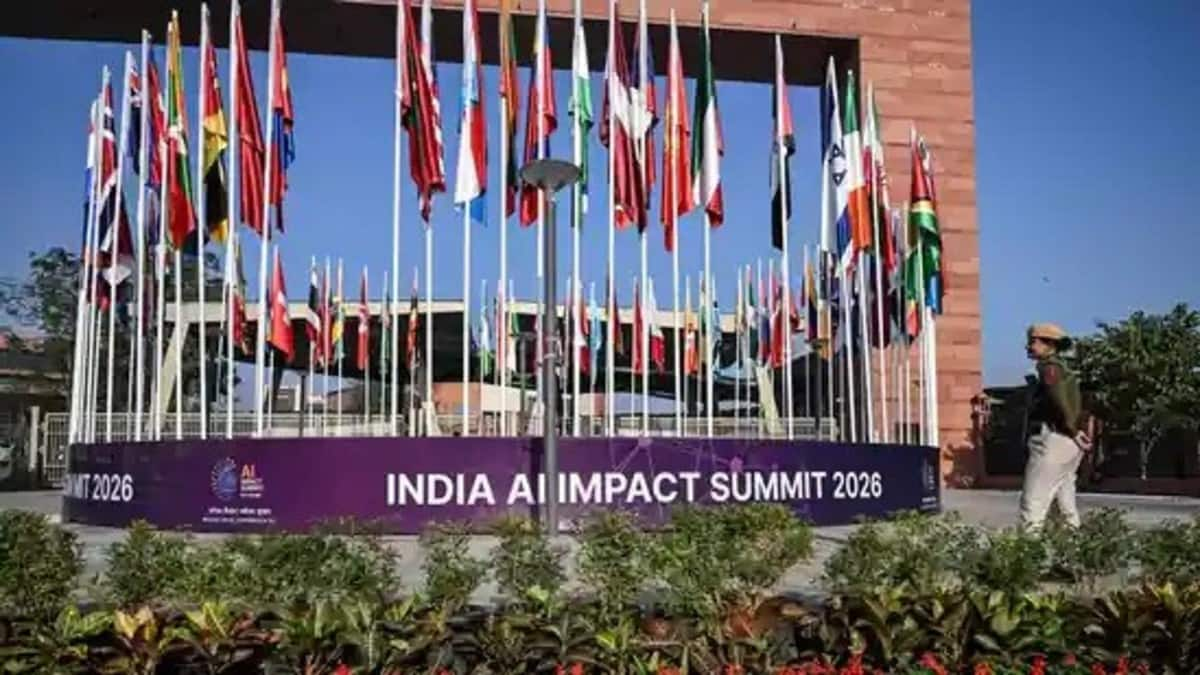
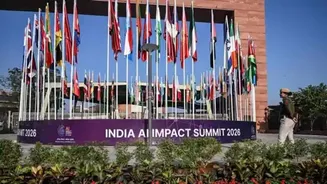
The AI Impact Summit 2026 served as a prominent platform for India to exhibit its burgeoning capabilities in domestically developed AI language models. The expo highlighted the ingenuity of Indian startups and companies, including Sarvam AI and Bharatgen, in building sovereign Large Language Models (LLMs). Beyond software, there were anticipations of hardware-related announcements, particularly concerning the expansion of India's data center capacity, a critical component for AI infrastructure development. The summit also delved into the profound impact of AI across various professions and industries, exploring the evolving skill requirements for the future job market and the potential of AI to support farmers, small businesses, and individuals.
Responsible AI and Governance
Union Minister Ashwini Vaishnaw addressed the complex challenge of guiding the responsible use of artificial intelligence. He highlighted that protecting intellectual property rights while training AI models requires a dual approach: techno-legal solutions developed through close industry engagement and broad consensus-building. Vaishnaw posed critical questions regarding the fair compensation of content creators whose work fuels AI model training and the necessity of robust guardrails to balance intellectual property with innovation. He cautioned that simple regulations would be insufficient, advocating for a collaborative effort involving technological tools and legal frameworks. Discussions also touched upon the potential of AI to undermine democratic systems through misinformation, as warned by Union Minister Jitin Prasada, emphasizing the need for digital literacy and critical thinking.
AI for Farmers and Education
The summit witnessed the launch of Bharat-VISTAAR (Virtually Integrated System to Access Agricultural Resources), an AI-driven, multilingual tool designed to empower farmers. This innovative platform, launched by Union Agriculture Minister Shivraj Singh Chauhan and Rajasthan Chief Minister Bhajanlal Sharma, provides 24/7 agricultural information via mobile or phone, assisting with crop planning, pest management, weather forecasts, and government schemes through an AI assistant named Bharati. The system also facilitates stakeholder collaboration and feedback for policy-making. Additionally, Union Minister Jitin Prasada underscored AI's potential to significantly enhance learning experiences for both students and teachers, cautioning against its use as a shortcut that could diminish critical thinking and curiosity.
Global Collaboration and India's Role
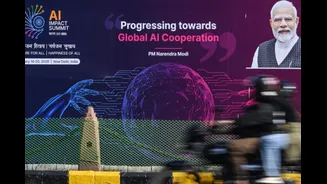
The India AI Impact Summit 2026 served as a crucial nexus for international dialogue on artificial intelligence. Uzbekistan expressed keen interest in AI collaboration with India, with Azizjon Akramov highlighting the summit as a significant event for the Global South. The summit aimed to leverage AI for human empowerment and innovation, position India as a global AI service provider, and democratize access to computational resources, datasets, and algorithms. The event also featured the launch of the India AI Readiness Assessment Methodology (RAM) Report, developed by UNESCO in partnership with IndiaAI Mission and Ikigai Law, offering insights into India's ethical AI landscape and preparedness. The presence of global leaders, including Bill Gates, underscored the international significance of India's AI advancements.
AI Speech Benchmark Launched
Amidst the summit's proceedings, IIT Madras-led AI4Bharat, in collaboration with Josh Talks, launched a new performance benchmark for evaluating speech recognition systems across 15 Indian languages. This benchmark is specifically designed to assess AI tools' effectiveness in Indian contexts, accounting for diverse dialects, code-switching (like Hindi-English), background noise, and regional variations. Notably, Sarvam AI's Sarvam Audio model achieved an impressive 93 percent accuracy in regional dialects. Comparative results indicated that while Google Gemini performed strongly among global tools, OpenAI and Meta models exhibited significant error rates. This development highlights the growing focus on voice AI as a critical interface for digital services in India.