








The AI Powerhouses
As India rapidly embraces generative AI, the foundational infrastructure enabling this revolution are data centers. These aren't just server rooms; they
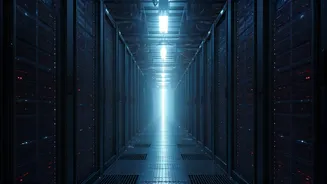
are colossal, high-security facilities akin to industrial refineries for digital information. Imagine a 20-acre campus in Greater Noida, where towering server racks reach the ceiling, emitting a constant hum as they process an astronomical number of calculations, powering everything from complex economic breakdowns requested via ChatGPT to drafting crucial business communications. These data centers are the physical bedrock upon which the virtual world of AI is built, representing a monumental construction effort that some industry leaders liken to the largest infrastructure buildout in human history. They are the silent engines driving the seemingly effortless AI responses we've come to expect, transforming raw data into intelligent insights at incredible speeds.
Building India's AI Capacity
India is actively stepping into the global AI arena, and a critical component of this strategy is the development of robust data center infrastructure. While the nation currently holds approximately 3% of the global data center capacity, despite generating around 20% of the world's data, there's a concerted effort to bridge this gap. This initiative is supported by both global tech giants and major Indian conglomerates, all investing heavily in constructing expansive AI computing structures across the country. The goal is to foster domestic infrastructure and promote data localization. This ambitious push aims to position India as a significant player in the AI landscape, ensuring it can meet the burgeoning demand for computational power necessary for advanced AI models and applications.
Inside the Secure Zones
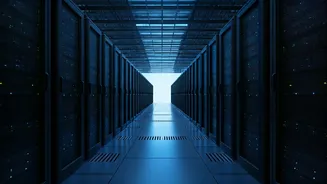
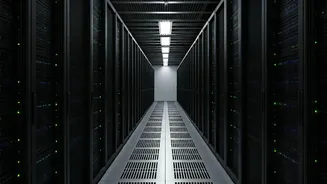
Accessing the core of an AI data center is akin to entering a highly secure zone, demanding strict protocols. These facilities are fortified, requiring visitors to pass through multiple security checkpoints, often necessitating the surrender of mobile devices. Inside, the environment is meticulously controlled. Special procedures, like stepping on adhesive pads to remove dust from footwear, underscore the need for an immaculate setting. Personnel movement is tightly regulated, with only authorized individuals—customer engineers, operations teams, vendors, and support staff—allowed access, and their activities are closely monitored. The visible landscape consists of endless rows of server racks, their indicator lights blinking rhythmically, and a pervasive, low hum emanating from the thousands of machines working tirelessly to process global user requests. This is the tangible, physical infrastructure underpinning the digital magic of AI tools we use daily.
The Five-Layered AI Cake
Understanding AI development involves visualizing a five-layered structure. At the very foundation lies the essential physical infrastructure of data centers, encompassing land, robust electricity, and sophisticated cooling systems. Layered upon this is the crucial 'compute' power, predominantly driven by Graphics Processing Units (GPUs) – specialized chips adept at the intensive calculations vital for training and operating AI models. The third layer is the vast ocean of data itself, comprising text, images, and signals that serve as the training material. Above this sit the foundation models, large-scale AI systems capable of interpreting language, visuals, and code. Finally, at the apex, are the applications, where AI is deployed in practical consumer and enterprise products. This intricate architecture highlights how data centers are the indispensable base upon which the entire AI ecosystem is built.
GPU Power and Heat Management
The operational heart of modern AI data centers relies heavily on Graphics Processing Units (GPUs). These are not your average computer processors; they are designed to handle massive parallel processing tasks, essential for the complex mathematical operations involved in training and running advanced AI models like ChatGPT. Sunil Gupta, MD and CEO of Yotta Data Services, explains that during AI model training, GPUs process enormous datasets to learn patterns and language structures. Once trained, these same GPUs enable the AI to respond to user queries in real-time, working at extraordinary speeds. Yotta, for instance, has partnered with NVIDIA to deploy 20,000 advanced GPUs at its Greater Noida facility. However, this immense computational power generates significant heat, necessitating advanced cooling systems. Data centers employ strategic designs like alternating hot and cold aisles, with cold aisles featuring active cooling through water pipelines, to manage this thermal challenge effectively.
Evolution of Data Centers
The landscape of data centers has significantly evolved, moving beyond simple digital storage solutions. While older facilities primarily functioned as massive 'filing cabinets' for storing and moving data, the current generation of AI data centers are purpose-built environments engineered to facilitate the intensive training and execution of complex AI models. Ashish Arora, CEO of Nxtra by Airtel, points out that AI data centers are specifically designed to enable machines to learn, reason, and analyze using high-performance GPUs. These GPU-accelerated systems can process vast amounts of data concurrently, crucial for modern AI development. In contrast, traditional data centers relied more on Central Processing Units (CPUs), which are designed for sequential task processing. This shift to GPUs, while exponentially increasing computational capability, also brings challenges, such as higher heat generation and the need for more robust infrastructure.
Power and Water Demands
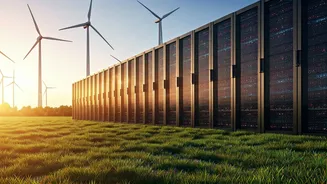
The immense power requirements of AI data centers are met through a combination of robust external connections and on-site generation. For instance, a 40 MW facility, expandable to 250 MW, might be connected to two separate external substations, and also house its own 220 Kv substation capable of providing power for up to 48 hours in case of external grid failure. The Uttar Pradesh government has actively supported this by establishing dedicated substations and dual grid access. Beyond electricity, water is another critical resource. The heat generated by GPUs necessitates substantial cooling, with estimates suggesting a 1 MW data center could require approximately 25.5 million liters of water annually. This poses a significant challenge in water-stressed regions. While companies claim to use recycled water and explore water-less technologies, the overall demand raises concerns about resource sustainability.
Economic and Environmental Concerns
The rapid expansion of data centers in India brings forth significant economic and environmental questions. While the government is actively promoting this growth through incentives like cheaper power and land, experts ponder the true job creation capacity of these highly automated facilities. There's also a pressing concern regarding the substantial electricity and water consumption in a resource-scarce nation. Projections indicate that data centers' electricity demand in India could more than triple by 2030, potentially increasing reliance on fossil fuels. Furthermore, the high water usage by these facilities exacerbates the strain on already water-stressed urban areas. There's a critical need for a comprehensive cost-benefit analysis to weigh the advantages against the environmental impact and ensure sustainable development.
The Future of AI Infrastructure
Despite the considerable challenges, the trajectory for data center development in India appears set. Experts emphasize that investing in digital infrastructure is as crucial as building roads or power plants, as AI is poised to permeate all aspects of government, business, and daily life. Without domestic infrastructure, India risks becoming dependent on other nations. However, this growth also sparks debate about potential dependencies on a few large technology companies and the wisdom of pursuing a paradigm where increased scale doesn't necessarily equate to deeper AI reasoning. The industry is navigating a complex path, balancing the imperative for technological advancement with the need for responsible resource management and a clear understanding of AI's long-term societal impact.