




Unusual Garden Delights
In the lush landscape of Bengaluru, a growing number of gardeners are diverging from conventional horticultural practices. Instead of tending to plants
that thrive on nutrient-rich soil and fertilizers, these enthusiasts are cultivating flora with a decidedly different dietary preference: insects. These aren't your average houseplants; they are carnivorous wonders, equipped with an array of ingenious traps like pitchers, sticky surfaces, and toothed jaws, all designed to ensnare unsuspecting prey. This fascinating niche is attracting a dedicated following, transforming ordinary gardens into miniature ecosystems where plants actively hunt for their sustenance, offering a truly unique and engaging gardening experience for those who dare to venture beyond the ordinary.
Adventures in Insectivory
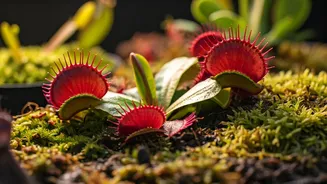
Dominic Savio, a Bengaluru-based tattoo artist, is a prominent figure in this burgeoning community of carnivorous plant cultivators. His journey into this specialized hobby began with an encounter in Amsterdam back in 2017. Following this, he actively sought out seeds and plants during his international travels, gradually building his collection. Savio's collection boasts a remarkable variety, featuring Nepenthes pitcher plants that lure prey into their deep wells, Drosera sundews with their glistening, sticky tentacles, butterworts employing similar adhesive traps, and the iconic Venus flytrap. At one point, his personal collection numbered around 200 plants, though this has since reduced to between 50 and 100, partly due to young students purchasing them for educational projects. Savio emphasizes that selling these plants is secondary to educating potential owners, as their specialized care requirements often lead to failure if not understood.
Specialized Care Needs
Cultivating carnivorous plants requires a departure from standard gardening techniques. Beyond the necessity for ample light and high humidity, these plants demand a substrate devoid of nutrients, as their evolutionary adaptation relies entirely on insects for their nutritional intake. Even the water used for their survival must be pure, typically either reverse osmosis (RO) or rainwater, both of which are naturally low in mineral content. Bengaluru's tropical climate offers some advantages, particularly for Nepenthes species, but replicating the specific environmental conditions for plants like Venus flytraps, which endure distinct temperature fluctuations in their native North American habitats, presents a greater challenge for growers. Providing the precise setting is paramount for their survival and flourishing.
A 'Pet-Like' Fascination
For many in Bengaluru embracing this unique hobby, carnivorous plants evoke a sense of companionship akin to owning a pet. Engineer Sumukha Javagal, who discovered his passion for these plants after encountering a pitcher plant in Shillong, feeds his carnivorous specimens small wild cockroaches and freeze-dried worms, typically used for pet fish. This interaction lends a unique, engaging dimension to the plant-care experience. Javagal has meticulously recreated suitable environments, housing his plants in large plastic containers under artificial lighting. He actively seeks out nutrient-poor soil from specific grasslands in Karnataka, such as where Drosera indica grows, and diligently washes it with rainwater, often mixing it with moss, to ensure the substrate meets the plants' specific low-nutrient requirements. The allure of these insectivorous wonders lies not just in their unusual feeding habits but also in the dedicated, almost nurturing, approach required to keep them thriving.