






Sudden Weather Shift
Lucknow is currently experiencing an uncharacteristic chill, with temperatures plummeting following unexpected rainfall. The mercury dipped to a low of
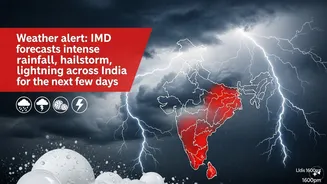
17°C on Wednesday morning, marking a significant departure from the norm. This abrupt change in weather is largely due to a potent Western Disturbance that originated over North Pakistan and Afghanistan. This disturbance is interacting with cyclonic circulations that have formed over Rajasthan and Uttar Pradesh. To compound matters, moisture drawn from both the Arabian Sea and the Bay of Bengal is fueling this atmospheric phenomenon. The current spell of unseasonal weather is anticipated to persist until April 9. However, the India Meteorological Department (IMD) forecasts a brief respite of two dry days before another wave of unseasonal rain and thunderstorms is expected to commence from April 11 onwards, keeping residents on alert for further unpredictable weather patterns.
Statewide Impact & Warnings
The unusual weather event is not confined to Lucknow; it has broadly impacted many regions across Uttar Pradesh. Over the past 24 to 48 hours, a noticeable decline in daytime temperatures, dropping by as much as 6°C, has been recorded in numerous districts. Cities such as Meerut, Prayagraj, Bijnor, and Etawah have registered particularly significant deviations from their normal temperature averages, with drops of -6.7°C, -6.0°C, -5.8°C, and -5.7°C respectively. In response to these conditions, the IMD has issued a yellow warning, covering more than half of the state's districts, totaling over 50. This warning forecasts potential light thunderstorms accompanied by lightning, gusty winds blowing at speeds of 30-40 kmph, and light rainfall over the next two days. Furthermore, a specific hailstorm warning has been issued for approximately 30 districts, including prominent areas like Lucknow, Gautam Buddha Nagar, and Agra. The IMD has also issued a stern caution regarding the potential risks associated with lightning strikes, hailstorms, and strong winds, emphasizing the threats to life, property, and standing agricultural crops. Residents are strongly advised to seek shelter indoors during periods of intense weather activity, and farmers are urged to implement necessary precautionary measures to safeguard their livelihoods.
Meteorological Explanation
Weather experts from the India Meteorological Department's (IMD) meteorological centre in Lucknow have identified the primary driver behind this unseasonal weather outbreak. The core reason is a powerful Western Disturbance situated over North Pakistan and its adjacent Afghanistan region. This system is manifesting as a cyclonic circulation in the upper layers of the atmosphere. According to these experts, this significant meteorological system is actively interacting with induced cyclonic circulations that have developed over Rajasthan and Uttar Pradesh. Simultaneously, moisture is being drawn into the system from both the Arabian Sea and the Bay of Bengal, effectively providing the necessary fuel for this atmospheric instability. The confluence of these factors—the Western Disturbance, the cyclonic circulations, and the influx of moisture—is creating a highly unstable atmospheric environment. This instability is the direct cause for the widespread occurrence of thunderstorms, lightning, gusty winds, and even hailstorms observed across various parts of the state, leading to the current unpredictable weather conditions.