
Railways: A Priority
The Indian government's emphasis on infrastructure continues to be a central part of its growth strategy. Finance Minister Nirmala Sitharaman announced
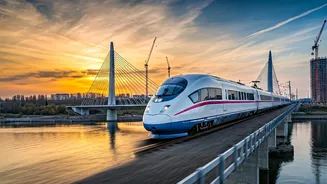
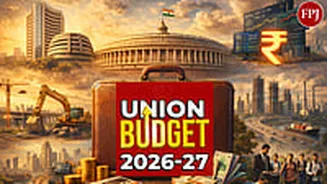
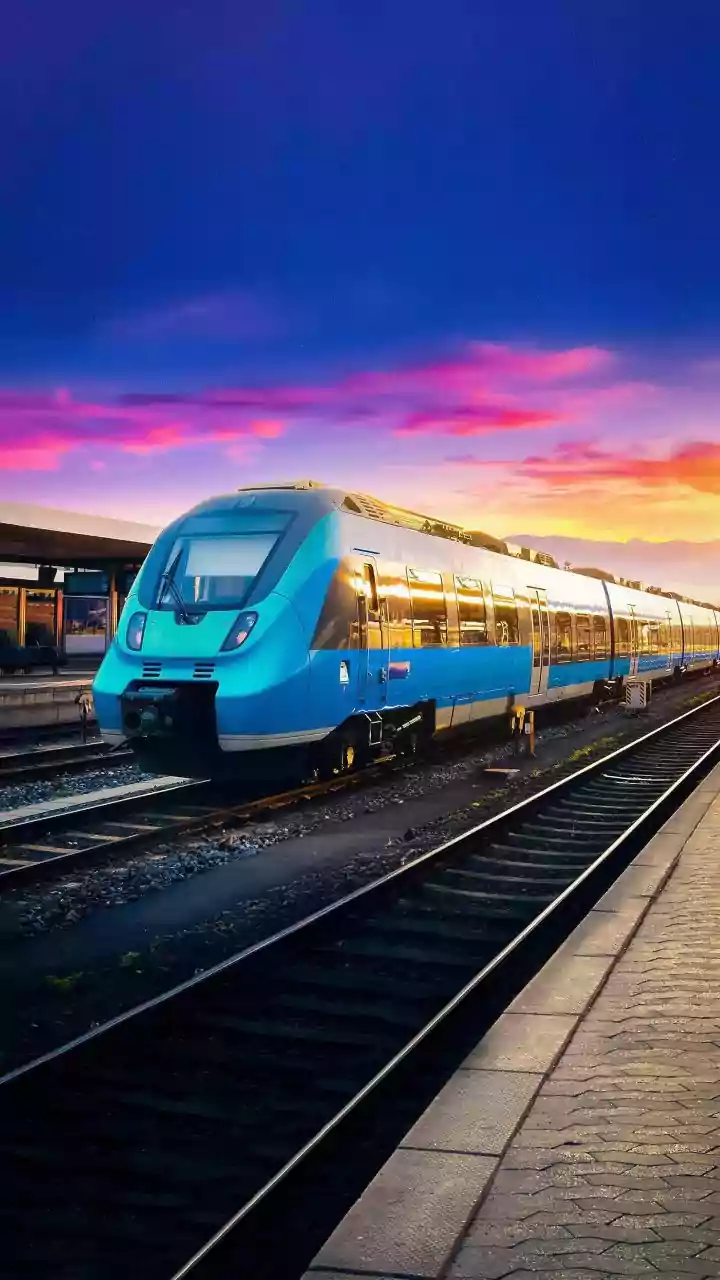
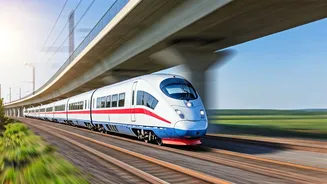
the establishment of seven new high-speed rail corridors, positioning them as essential 'growth connectors' across the country. Currently, the Mumbai-Ahmedabad High Speed corridor, also known as the bullet train project, is under development, and the Surat-Billimora stretch is expected to be operational by August 15, 2027. This aligns with the government's push for higher capital expenditure, with a budget of Rs 12.2 lakh crore allocated for the financial year 2026-27 (FY27), showing approximately a 9% increase from the Rs 11.21 lakh crore allocated for FY25-26. Infrastructure investments have a high multiplier effect, where every rupee spent on infrastructure leads to an increase in GDP.
High-Speed Rail Expansion
The new high-speed rail corridors are a significant part of the government's commitment to improving infrastructure. The initial Mumbai-Ahmedabad bullet train project, for example, has faced challenges, resulting in a nearly doubled cost to Rs 1.98 lakh crore from the initial estimate of Rs 1.08 lakh crore, and also suffered a delay of four years due to factors like land acquisition and the Covid-19 pandemic. The Mumbai-Ahmedabad corridor is slated to open in stages, starting with the Surat-Bilimora section, followed by Vapi-Surat, Vapi–Ahmedabad, and the Thane-Ahmedabad sections, with the complete corridor expected to be fully operational by 2029. These projects are resource-intensive, but they are viewed as critical to the long-term advancement of the nation's connectivity and economic prospects.
Roads and Highways
The roads and highways sector, along with the railways, is a key component of India's infrastructure drive. The government has prioritized the expansion of these sectors, with both accounting for over 50% of the Centre’s total capital expenditure in the previous financial year. Data from FY 2024-25 indicates the allocation of Rs 2.85 lakh crore for road transport and highways and Rs 2.52 lakh crore for railways, forming a substantial part of the total central capital expenditure of Rs 10.52 lakh crore during that period. The government's focus on infrastructure, especially since FY15, has led to a sustained increase in public capital expenditure, further accelerating in recent years. This focus on roads and highways seeks to improve connectivity.
Budget's Impact on Growth
The government's push to raise capital expenditure is a key feature of its financial strategy, including the allocation of Rs 12.2 lakh crore for FY26-27 (FY27). This represents a notable 9% increase from the Rs 11.21 lakh crore allocated for the previous financial year (FY25-26). These infrastructure investments, particularly in railways and roads, are anticipated to have considerable effects on economic growth, productivity, and logistics efficiency. This rise in spending is a continuation of the trend that began after the government boosted its capital expenditure budget. The capex increased by 92% between FY19 and FY22, from Rs 3.07 lakh crore to Rs 5.92 lakh crore, maintaining this momentum, with the capex outlay rising to Rs 11.21 lakh crore for FY26.