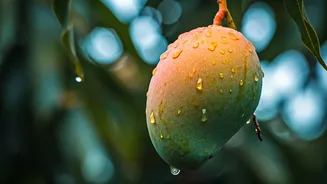

Rain's Unwelcome Kiss
The unseasonal downpours, a consequence of changing weather patterns, have dealt a significant blow to India's mango crop. These erratic rains, arriving
at the wrong time of year, have disrupted the natural flowering and fruiting cycles of mango trees. This has resulted in reduced yields and, in some areas, complete crop failure. Mango farmers, who depend on a specific seasonal pattern for their livelihood, are facing considerable losses. The early onset of the rains and their prolonged duration have created an environment that is detrimental to mango production. This unexpected weather has not only affected the quantity of the mangoes but also the quality, making them more susceptible to diseases and affecting their taste and shelf life.
Farmers Face Challenges
The unexpected rainfall has brought a wave of challenges to mango farmers across India. Many farmers have reported significant losses, with their mango orchards severely affected by the weather. The untimely rains have caused flower drops, impacting the fruit setting process, and leading to smaller harvests. Furthermore, the excess moisture has created conditions conducive to fungal diseases and pest infestations. Farmers have to deal with increased expenses to combat these issues, using pesticides and fungicides to save their remaining crops. The economic impact on the farmers has been substantial, as they struggle to recover their investments and sustain their livelihoods. Some farmers are left to face complete crop failures, leaving them with no income from this year's harvest and increased debts to manage.
Industry-Wide Impact
The impact of the unseasonal rainfall extends far beyond the individual farmer, affecting the entire mango industry. The reduced yields directly translate to a decrease in the supply of mangoes in the market, which can drive up prices. This price increase impacts consumers and the businesses that rely on the fruit. The mango industry involves diverse stakeholders, including farmers, wholesalers, retailers, processors, and exporters. The adverse weather conditions affect each of these groups, disrupting supply chains and causing financial losses. The industry is now evaluating strategies to combat these challenges, including exploring climate-resilient farming techniques and improving the overall infrastructure to manage the impact of erratic weather patterns. Some stakeholders are looking at crop insurance schemes to mitigate financial risks. Export markets, which depend on a consistent supply, may also be affected, leading to a decline in international sales and impacting the foreign exchange earnings of the country.
Climate Change's Role
The unseasonal rainfall can be attributed to the effects of climate change. Increased global temperatures and altered weather patterns have led to more unpredictable and extreme weather events. The changes have caused erratic rainfall and rising temperatures, making it hard to grow mangoes. The unpredictable weather presents a challenge to the established farming practices that are attuned to a more predictable climate. Adapting to these new challenges is crucial. This will require investment in research to develop climate-resilient mango varieties. Additionally, it calls for improved weather forecasting systems and enhanced infrastructure for managing water resources. The adoption of sustainable farming practices, which includes efficient irrigation and organic farming techniques, can also play a vital role in mitigating the impact of climate change on mango production.
Future Outlook
The future of mango production in India hinges on the ability of stakeholders to adapt to the changing climate conditions. Farmers, industry professionals, and policymakers need to collaborate on developing strategies to ensure the sustainability of mango cultivation. These steps should include adopting climate-resilient farming methods, improving irrigation systems, and investing in research and development. Weather forecasting can aid in predicting the weather patterns, allowing farmers to prepare and protect their crops. Diversifying farming practices can also help minimize risks. Overall, managing the impact of climate change on the beloved 'king of fruits' requires a holistic and proactive approach.