






Early Arrivals & Origins
The dawn of motor taxis in India began around 1911-1912, marking India as one of the pioneering nations outside of Europe to embrace this new form of transportation.
Initially, these services were established in Bombay (now Mumbai), a bustling port city where horse-drawn conveyances like ekkas and tangas were the prevalent modes of travel. The advent of automobiles in the early 1900s opened up new business avenues, particularly for affluent Parsi families and British officials who recognized the commercial potential. Many of the first motor taxis were spearheaded by visionary Parsi entrepreneurs, including Dorabji Tata, while local garage owners actively imported vehicles from England. These pioneering vehicles were often luxury models from brands such as Fiat, Humber, and Austin, and they were typically hired on an hourly basis. The primary clientele for these early motor taxis comprised European officials, wealthy Indian business magnates, and esteemed guests staying at prestigious establishments like the Taj Mahal and Watson's hotels.
The Meter Revolution
In the nascent days of motor taxis in India, the absence of standardized pricing often led to contentious negotiations between drivers and passengers, frequently resulting in disputes and accusations of unfair practices. To rectify this, mechanical taxi meters, imported from Britain, were introduced in Bombay around 1912-1913. However, these new devices were met with considerable skepticism. Drivers often derided them as 'iron boxes that eat money,' expressing their distrust, while passengers harbored fears that the meters might be tampered with to inflate fares. Despite initial resistance, the introduction of meters was a crucial step towards establishing transparency and order in the taxi industry, laying the groundwork for more structured fare systems that would eventually become standard.
Spreading Across Cities
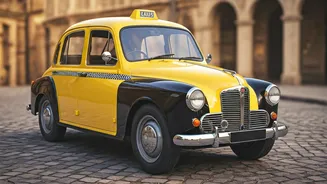
From its origins in Bombay, the concept of motor taxis gradually permeated other major Indian cities, signifying a significant shift in urban mobility. Kolkata was among the next major metropolitan areas to adopt this new mode of transport, followed by Delhi. In the capital, motor taxis quickly became a preferred choice for British officers and diplomats, reflecting their status as a modern and efficient service. Large American-made automobiles soon became a popular selection for taxi fleets operating in Delhi, adding to the diverse range of vehicles on the roads. By the 1930s and 1940s, the distinctive black-and-yellow taxis, which have since become an indelible symbol of Mumbai's cityscape, began to dominate the streets, visually defining the urban environment.
Drivers and Discipline
The early decades of taxi services in India saw a diverse workforce behind the wheel, with many drivers hailing from regions like Konkan, Uttar Pradesh, and Punjab. A notable segment of these drivers were former army mechanics who had acquired valuable vehicle handling skills during their military service. Operating a taxi was a demanding profession, requiring long working hours and an intimate knowledge of English street names, which drivers had to diligently memorize. Taxi owners, many of whom were Parsi individuals during the period spanning the 1910s to the 1930s, maintained a high standard of discipline among their drivers. Strict guidelines were enforced, mandating politeness towards British officers, the wearing of a neat cap and coat, and an absolute prohibition on driving after consuming alcohol, underscoring the professional expectations of the era.
Initial Resistance & Adaptation
The transition from traditional transport to motor taxis was not without its challenges and conflicts. In various localities, the sight of fast-moving motorcars startled pedestrians, and local newspapers frequently carried letters detailing concerns that these new vehicles frightened horses and caused considerable disruption on public roads. In some areas, authorities even imposed restrictions, limiting taxi operations to daytime hours. When motor taxis were introduced in Kolkata, they faced intense opposition from established operators of traditional horse-drawn carriages. Tanga unions reportedly organized public protests, which at times escalated to incidents of stone-throwing and damage to vehicle tires. This resistance compelled municipal authorities to implement regulations that dictated where different types of vehicles could operate, attempting to manage the co-existence of old and new transportation methods.
Post-Independence Icons
Following India's independence, the Fiat Premier Padmini ascended to become the undisputed icon of Indian taxis, particularly in Mumbai, where it remained a steadfast presence on the roads for close to four decades. The turn of the millennium brought about further transformations with the introduction of radio taxis, offering a more organized and accessible service. However, the most significant disruption to the sector occurred after 2013, with the advent of app-based services like Ola and Uber, which fundamentally reshaped urban mobility across the country. Despite these modern advancements, traditional taxis, especially the classic Mumbai yellow-and-black models, continue to operate in cities like Mumbai and Kolkata, serving as a tangible and living connection to India's rich transportation history.
Etymology of 'Taxi'
The very word 'taxi' carries a historical weight and a direct link to its function. Its etymology traces back to the French term 'taximètre,' which precisely denotes a fare meter. This, in turn, originates from the Latin word 'taxa,' meaning fee or rate. The innovative concept of measuring fares based on distance first emerged in Paris during the late 19th century. Initially, this system was implemented in horse-drawn carriages before being seamlessly adapted for the burgeoning motor vehicles, establishing the global standard for taxi fare calculation that persists to this day.