






The Unbearable Heat
India is currently enduring a severe heatwave, with the World Meteorological Organization forecasting a potential return of El Niño conditions as early
as May-June. Adding to the concern, the India Meteorological Department has issued warnings about persistent heatwave conditions expected from April through June, predicting temperatures to soar well above average across vast swathes of the country. In this climate, surviving without air conditioners or coolers has become a formidable challenge, particularly in bustling urban centers. The rising mercury makes daily life an ordeal, pushing people to seek any form of respite from the oppressive heat. This intense warmth significantly impacts daily routines, affecting work, sleep, and overall well-being, making the quest for effective cooling solutions a critical concern for millions.
Rajasthan's Green Oasis
In the arid landscapes of western Rajasthan, a time-tested method is providing sanctuary from the sweltering sun. Residents find significant relief by congregating beneath the dense, evergreen foliage of the 'mithi jai' tree, scientifically identified as Salvadora oleoides. This remarkable tree is far more than just a source of shade; it's a vital part of the local ecosystem and a cornerstone of traditional cooling strategies. Its ability to thrive in dry conditions and provide a substantial canopy makes it an invaluable natural asset. The community's reliance on this tree highlights a deep connection with nature and an understanding of its inherent cooling properties, offering a sustainable alternative to modern, energy-intensive cooling systems.
The Mighty 'Mithi Jai' Tree
The Salvadora oleoides, affectionately known as 'mithi jai' in Rajasthan, is a multipurpose tree recognized for its medicinal properties and its oil-yielding capabilities. Belonging to the Salvadoraceae family, it's a common sight in arid regions spanning Rajasthan, Haryana, Punjab, and Gujarat. In Rajasthan, it particularly dominates the vegetation in districts like Jodhpur, Barmer, Bikaner, Jaisalmer, Churu, Jhunjhunu, and Nagaur. The tree's dense, clustered leaves create a significant natural canopy, effectively lowering ambient temperatures. Astonishingly, the area beneath its shade can be 5-8 degrees Celsius cooler than the surrounding environment, even during the hottest afternoons. This 'desi AC' is a lifeline, especially in areas with limited or no electricity access, where people gather with their livestock to rest and relax, finding much-needed solace from the extreme heat.
Vetiver Grass Coolers
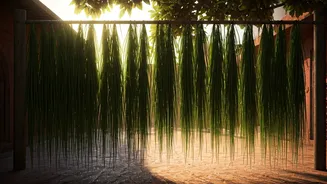
Complementing the cooling effect of the 'mithi jai' tree, some communities also employ a clever method using vetiver grass, known locally as 'khas'. By creating wet curtains fashioned from this fragrant grass, they harness the power of evaporative cooling, effectively mimicking the function of an air cooler. This natural technique relies on the principle of water evaporation to dissipate heat, creating a noticeably cooler microclimate. The gentle scent of the vetiver grass also adds a pleasant aroma to the air. This sustainable approach provides a refreshing escape from the heat, demonstrating the ingenuity of traditional cooling solutions that are both environmentally friendly and highly effective in combating the harsh Indian summers.