








Tragic Fatality Amidst Heatwave
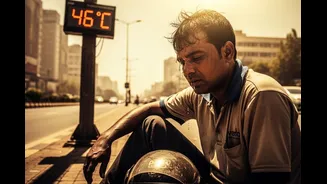
Surat experienced a devastating incident where a 35-year-old textile mill worker, Ramesh Chauhan, collapsed and tragically died on Tuesday. Initial medical
assessments strongly indicate that extreme heatstroke was the primary cause of his demise. This unfortunate event occurred while he was on duty at a textile facility located in the Pandesara industrial area. He was swiftly transported to a nearby medical facility, but sadly, he was pronounced dead upon arrival. The intense heat and oppressive humidity prevalent in the region are believed to have been significant contributing factors to this fatal outcome, highlighting the extreme dangers posed by the prevailing weather conditions.
Hospitals Gear Up for Heat
In direct response to the escalating number of heat-related ailments, the Surat Municipal Corporation (SMC) has mandated that all public and private healthcare institutions in the city establish specialized wards. These dedicated units are being fully equipped with essential medical supplies and staffed by trained personnel, ensuring that patients presenting with symptoms of heatstroke and other heat-induced conditions can receive immediate and effective care. New Civil Hospital (NCH) has prepared a 10-bed ward, while SMIMER hospital has set up a more extensive 25-bed facility, complete with amenities like bathtubs, coolers, and air conditioning to provide a more comfortable and therapeutic environment for recovery. On a daily basis, NCH is treating approximately 10 patients, and SMIMER hospital is attending to around eight patients exhibiting symptoms of heatstroke.
Expert Advice for Survival
Health officials are emphasizing the critical importance of proactive measures to mitigate the risks associated with the ongoing heatwave. Dr. Ashish Naik, a physician at Surat Civil Hospital, noted a substantial rise in patients exhibiting classic heatstroke symptoms such as elevated fever, severe dehydration, dizziness, and nausea, underscoring the urgency of public awareness and precaution. Citizens are strongly advised to maintain consistent hydration levels by drinking plenty of water, and to rigorously avoid any strenuous physical activities during the most intense periods of the day, typically between 11 am and 4 pm. Furthermore, opting for lightweight, loose-fitting cotton apparel in light colors is recommended to facilitate better heat dissipation. Vulnerable groups, including the elderly and young children, require special attention and should be monitored closely.
Industry and Public Safety
The textile sector, a cornerstone of Surat's economy, is under particular scrutiny, with advisories issued to implement worker safety protocols. Factories are being urged to ensure superior ventilation systems, provide readily accessible clean drinking water, and implement flexible break schedules during peak heat hours. This incident has also amplified concerns for workers in less organized sectors who often labor under arduous conditions without adequate heat protection. Labor unions are actively campaigning for stricter enforcement of heat safety regulations within industrial zones. In a broader public safety initiative, the SMC has begun relocating over 1,400 individuals who were residing on footpaths to designated shelter homes, while also educating those who decline relocation on essential hydration and heat-avoidance techniques. Moreover, arrangements for cold water and oral rehydration solutions have been made at 155 BRTS bus stops, and temporary shade structures have been erected at traffic signals for vulnerable individuals.
Weather Patterns and Historical Context
Surat has recently experienced temperatures significantly higher than normal, with the maximum temperature on Tuesday reaching 42.2°C, a stark contrast to the typical readings for this period. This surge is attributed by the India Meteorological Department (IMD) Ahmedabad director, A K Das, to specific wind patterns. Westerly to northerly winds blowing along the coastal areas near Surat have contributed to the elevated temperatures, a phenomenon that led the IMD to declare a heatwave from May 9 to 12. However, a significant shift occurred on Wednesday, with temperatures plummeting to 34.3°C, falling below the normal average. Historically, Surat has recorded extreme high temperatures, with the highest maximum recorded since 1901 being 45.6°C on June 10, 1901, April 5, 1951, and May 1, 1956. The Gujarat government has issued a red alert, cautioning citizens that the risk of heatstroke is particularly high, emphasizing the need for continuous hydration and protection.