









A Speedy Journey
The proposed semi-high-speed rail corridor promises to drastically reduce travel time between Visakhapatnam and Hyderabad. Currently, even the fastest
trains, like Vande Bharat, take between 10 and 12 hours due to track limitations. This new project aims to slash this time to a mere 4-5 hours, making it one of the fastest intercity rail links in South India. The Preliminary Engineering and Traffic Survey (PETS) has already been completed by the Railway Board, marking a significant step forward. The project involves two corridors: Visakhapatnam – Vijayawada – Kurnool Town and Visakhapatnam – Vijayawada – Shamshabad (Hyderabad Airport). Importantly, the Shamshabad connection will allow passengers to reach Hyderabad International Airport directly from Visakhapatnam, avoiding the need to enter the city first. The estimated cost of the survey was around Rs 2.70 crore. This development is set to change how people move between coastal and inland cities.
The Vande Bharat Upgrade
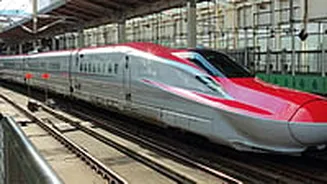
India's existing Vande Bharat trains are already enhancing the passenger experience, but they are limited by the speed of the existing tracks. The new project will support upgraded Vande Bharat-type trains, capable of running at 200-220 kmph, in contrast to the current 110-130 kmph on conventional tracks. The current Vande Bharat trains can reach speeds of up to 160 kmph, but due to older tracks and congestion, they operate at lower speeds. This semi-high-speed corridor is a crucial step towards preparing the country for full bullet-train functionality, akin to Japan and Europe. It is expected that once approved, land acquisition and alignment planning will commence. The vision is to enable trains to run at optimal speeds, making long-distance intra-state and inter-state travel faster, safer, and more efficient.
Boosting Economic Growth
This ambitious project is expected to bring substantial benefits to the region. Firstly, it will boost tourism by providing easier access to popular destinations such as Araku Valley, Vizag beaches, Srisailam, Nagarjuna Sagar, Amaravati, and Kurnool’s heritage sites. Secondly, it will promote employment and urban growth by encouraging job commuting and multi-city living, reducing travel time significantly. Moreover, the project will enhance business and logistics by providing faster connectivity between Visakhapatnam Port, Vijayawada’s trade hubs, and Hyderabad’s IT and pharmaceutical clusters. Officials believe Visakhapatnam will emerge as a multi-modal transport hub, connecting ports, airports, and high-speed rail. If cleared for execution, the Visakhapatnam-Hyderabad corridor could become a transformative infrastructure shift in South India.