
Trade Deal Discrepancy
A recently finalized trade agreement between India and the United States has ignited a significant domestic outcry in Pakistan. Observers and critics within
Pakistan express deep disappointment, arguing that extensive diplomatic efforts and overtures towards Washington have seemingly yielded little tangible benefit. Despite significant engagement from Pakistani leadership, including Prime Minister Shehbaz Sharif and Army Chief General Asim Munir, the nation finds itself with a higher tariff rate on its exports to the US compared to India. This outcome has led many to question the effectiveness of Pakistan's foreign policy approach, particularly when contrasted with India's seemingly more advantageous position.
Perceived Strategic Success
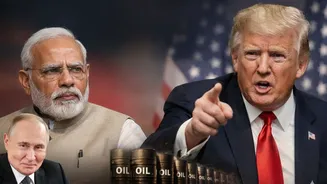
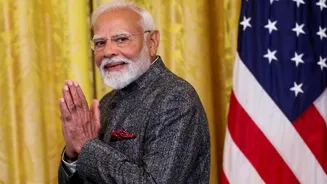
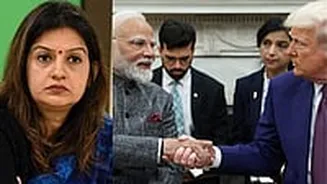
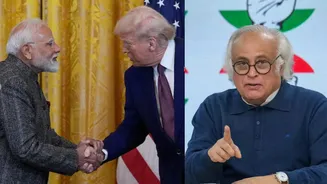
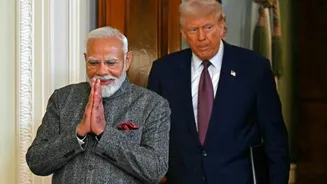
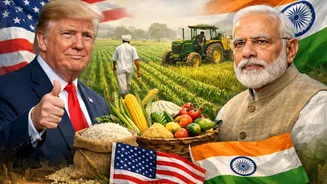
The US-India trade deal, announced on February 2nd, has set American tariffs on Indian exports at a lower 18 percent. This development is widely seen as a strategic victory for India, which has reportedly maintained a strong stance against US pressure throughout the negotiations. President Donald Trump's public sharing of images featuring Indian landmarks and Prime Minister Narendra Modi, shortly before announcing the tariff reduction, has not gone unnoticed. Many in Pakistan find it perplexing that India managed to secure such favorable terms without what they perceive as excessive subservience to the US administration, highlighting a perceived difference in negotiation leverage and approach.
Public and Political Reactions
The stark contrast in trade outcomes has fueled widespread anger and sarcasm across Pakistan, particularly on social media. Numerous Pakistani commentators have voiced their disbelief, with some sarcastically remarking on the perceived futility of certain diplomatic maneuvers. Former PTI minister Hammad Azhar criticized the approach, stating that 21st-century foreign policy relies on economic strength, tariffs, and market access, rather than mere optics or personal relationships. He pointed to India's recent trade deals with the EU and US as evidence, suggesting that sycophancy and photo opportunities are ineffective. Journalist Asad Toor highlighted how this tariff decision exacerbates Pakistan's existing economic woes, including declining exports and foreign investment, further diminishing the nation's bargaining power.
Critique of Negotiation Strategy
The opposition in Pakistan has been quick to capitalize on the disparity, with PTI leaders arguing that India negotiated from a position of "strategic autonomy." They contend that Pakistan's leadership relied too heavily on personal engagement and diplomatic charm, ultimately resulting in a less favorable trade agreement. Imran Riaz Khan echoed this sentiment, criticizing the lobbying efforts and stating that even offering resources like Balochistan's minerals in exchange for preferential treatment would not secure genuine respect. Digital creator Wajahat Khan offered a businessman's perspective, suggesting that Trump perceived India as a partner, while Pakistan was treated as a mere 'shopkeeper,' underscoring the importance of perceived national strength and public mandate in international negotiations.
Economic Ramifications
The implications of these trade agreements extend beyond immediate tariff rates, with significant long-term economic prospects in mind. India's recent trade pacts, including the one with the European Union, are anticipated to provide a substantial boost to its economy. The US trade deal alone is projected to increase Indian exports by as much as US$150 billion over the next decade. This highlights the potential economic gains that can be achieved through successful trade negotiations and underscores the perceived missed opportunity for Pakistan, whose critics argue that its current approach has hindered its ability to capitalize on such significant international economic opportunities.