





New Institutes Unveiled
The Budget 2026 emphasizes expansion and enhancement in education infrastructure. A significant announcement includes the establishment of three new AIIMS
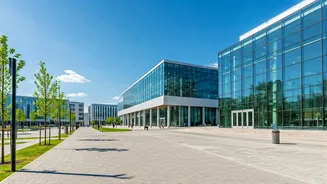
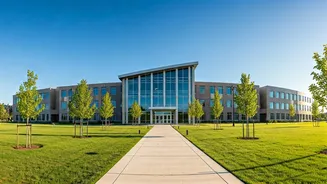
(All India Institutes of Medical Sciences) and three new Ayurveda institutes. Furthermore, a new design institute will be set up in the eastern region, highlighting a commitment to diversified educational opportunities. These developments underscore the government's focus on improving healthcare education and design education, and expanding access to these fields. This commitment to infrastructure development is seen as a key step in strengthening the education system across the country, aiming to create more skilled professionals.
Content Labs in Schools
The Indian Institute of Creative Technologies in Mumbai will receive assistance to create content labs in 15,000 secondary schools. This initiative focuses on incorporating modern learning methods and resources into classrooms, which aligns with the goal of improving the quality of school education nationwide. By supporting these labs, the budget aims to provide students with more opportunities for practical learning and skill development, ensuring they are well-prepared for the future. This approach underscores the government’s commitment to equipping the younger generation with relevant skills.
University Townships Planned
The Union Budget 2026 includes a strategic plan for supporting five university townships near major industrial logistics centres. These townships will comprise numerous universities, colleges, residential complexes, and research facilities. This approach promotes integrated education, encouraging collaboration between educational institutions, industry, and research. This initiative is designed to foster a comprehensive ecosystem for education and research, helping to develop a skilled workforce and stimulate economic growth. The aim is to create vibrant hubs for academic excellence.
Short-Term Modular Courses
The government intends to support professional bodies such as ICAI, ICSI, and ICMAI in developing short-term modular courses. These courses will be paired with practical tools aimed at supporting the growth of corporate mitras in tier 2 and tier 3 cities. This initiative is designed to provide practical skills and knowledge directly applicable in the professional world, helping to fill skill gaps. The focus is on providing targeted skill development and improving employability, thereby contributing to the economic development of smaller cities and towns.
Education Budget Allocations
The education sector received a record allocation of Rs 1,28,650.05 crore for the 2025-26 budget. The Department of School Education and Literacy received Rs 78,572.10 crore, accounting for 61% of the total, which focuses on enhancing school education and improving the overall quality of schooling across India. The Department of Higher Education was allocated Rs 50,077.95 crore, or 39% of the total, with the goal of supporting the expansion and growth of higher education institutions. This funding underscores the government's commitment to prioritizing education and investing in both foundational and advanced learning institutions.
Allied Health Disciplines
As part of the education budget, ten new allied health disciplines will be introduced to train 1 lakh Allied Health Professionals (AHP) over the next five years. This initiative encompasses areas such as optometry, anaesthesia, applied psychology, and behavioural health. The expansion of these programmes is to address the growing demand for skilled healthcare professionals, strengthening the healthcare system and providing more employment opportunities. This initiative reflects the government’s comprehensive approach to healthcare education and the development of a well-rounded healthcare workforce.
Historical Budget Trends
Examining historical data, the education budget allocations demonstrate a consistent investment in both school and higher education. In 2020–2021, school education received Rs 56,536 crore and higher education received Rs 38,572 crore. The figures increased in 2021–2022 to Rs 59,845 crore and Rs 39,466 crore respectively. Further increases were noted in 2022–2023 with Rs 63,449 crore for school education and Rs 40,828 crore for higher education. In 2023–2024, the budget allocated Rs 68,805 crore for school education and Rs 44,095 crore for higher education. For the following fiscal year of 2024–2025, the budget allocated Rs 73,008 crore for school education and Rs 47,620 crore for higher education. Lastly, for the fiscal year 2025-2026, the allocations have increased significantly, with Rs 78,572.10 crore for school education and Rs 50,077.95 crore for higher education. This shows a continuous and increasing dedication to education.