




A New Era Dawns
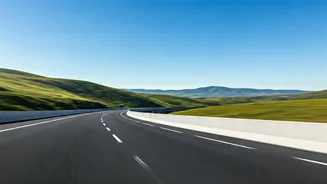
The vital 'Missing Link' on the bustling Mumbai-Pune Expressway has officially been inaugurated, marking a significant milestone in transportation infrastructure
for Maharashtra. This eagerly awaited segment, spanning a considerable 13.3 kilometers, promises to redefine the commuting experience between these two major cities. Initially, the route will be accessible exclusively to four-wheelers and buses for the first three months, with no additional toll charges levied, emphasizing its role as a public benefit. The completion of this project signals a new era of enhanced connectivity and reduced travel friction for countless individuals who traverse this corridor regularly.
Engineering Marvels Unveiled
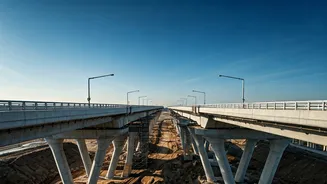
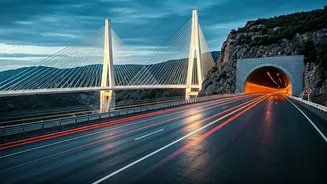
The 'Missing Link' is an extraordinary feat of engineering, meticulously designed to overcome challenging terrains. Its 13.3 km alignment is a testament to innovation, featuring an impressive 850-meter viaduct that gracefully spans across the landscape. Adding to its complexity and grandeur are two extensive tunnels, collectively stretching nearly 9 kilometers, burrowing through the hills and even under the serene Lonavala lake. A striking 640-meter cable-stayed bridge, its towers reaching a majestic 180 meters into the Tiger Valley, serves as a prominent landmark. This intricate combination of structures ensures a seamless and swift passage, bypassing the often-congested and winding ghat sections.
Transforming Travel Dynamics
The opening of the 'Missing Link' is poised to profoundly transform the travel dynamics between Mumbai and Pune. By providing an alternative to the traditional ghat section, commuters will no longer have to contend with its steep inclines and sharp turns. Furthermore, this new route offers a welcome bypass for the popular tourist destinations of Lonavala and Khandala, meaning travelers can reach their ultimate destinations more directly without being slowed by local traffic. The deputy chief minister Eknath Shinde highlighted that 99% of the work is complete, emphasizing its substantial impact in reducing congestion, expediting journeys, and ensuring a safer commute, which in turn is expected to stimulate economic activity through improved rapid transportation.