






The Next Frontier Beckons
The landscape of space exploration is on the cusp of a major transformation, with commercial space stations poised to become the next significant driver
of activity. As the venerable International Space Station (ISS) approaches its planned retirement within the next five years, a new race is on to establish private orbital outposts. This transition is viewed by industry leaders as the pivotal development shaping space endeavors for the coming decade. While the Artemis program's return to the Moon is undoubtedly a monumental event, heralding a new age of lunar exploration, the establishment of a thriving lunar economy remains a long-term prospect. In the more immediate future, significant technological advancements and tangible commercial advantages are anticipated to emerge from these new space stations. Eric Stallmer, executive vice president of Voyager Technologies, a prominent US-based private space and defense firm, articulated this vision in a recent interview, highlighting the near-term potential of orbital platforms.
Orbital Hubs of Innovation
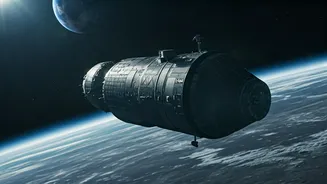
For over two decades, the ISS, orbiting approximately 400 kilometers above Earth, has served as humanity's longest-standing laboratory in space, continuously occupied by astronauts since 1998. It has welcomed nearly 300 individuals from diverse backgrounds for extended stays. Initially designed for a 15-year lifespan, the ISS has seen its operational period extended significantly, largely due to the absence of a ready replacement. Meanwhile, China's Tiangong space station has been operational since 2022, though its utilization has been exclusive to Chinese astronauts, in contrast to the ISS's international crew complement of astronauts from over 25 nations. Looking ahead, numerous private entities, including Voyager Technologies, are actively planning the launch of their own space stations in the coming years to fill the void left by the ISS. These advanced facilities are envisioned as crucial platforms for a wide array of scientific research, including investigations into space exploration, long-duration human habitation, and the development of novel technologies leveraging the unique microgravity environment of space for Earth-based applications.
A Thriving Commercial Ecosystem
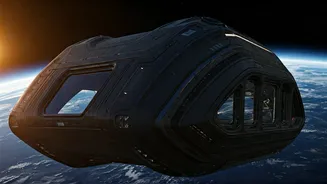
The potential for multiple commercial space stations to operate concurrently is significant, opening up a vast array of possibilities for scientific and commercial endeavors. As the true scope of what can be achieved in the space environment continues to unfold, a new wave of experiments, particularly from the commercial sector, is expected. Voyager Technologies, in collaboration with international partners such as Airbus and Mitsubishi, is developing Starlab, widely considered a direct successor to the ISS, with a projected launch in the 2028-29 timeframe. A key distinction from the ISS's modular assembly in orbit is Starlab's anticipated launch as a single, complete unit. Another prominent US company, Axiom Space, known for its involvement in missions like the one carrying Indian astronaut Shubranshu Shukla to the ISS, is also constructing its own space station. India, through the Indian Space Research Organisation (ISRO), has ambitious plans for its own space station, named Bharatiya Antariksh Station, targeting a 2035 launch. The demand for access to the space environment for research and technological development is so robust that Starlab is reportedly already booked to near full capacity, signaling a substantial market for such facilities.
Future of Space Dominance
The market for space station operations is robust enough to potentially accommodate around five stations simultaneously, driven by substantial demand across various sectors. Biomedical research, in particular, presents a significant area of interest, with ongoing advancements and a keen curiosity from academic institutions, students, and a diverse range of researchers. The involvement of corporate entities is also steadily increasing. Historically, Eric Stallmer, who previously led the Commercial Spaceflight Federation in the United States, has observed a trend where the private sector is increasingly dominating space activities. National space agencies like NASA and ISRO are anticipated to shift their focus more towards strategic objectives and fundamental scientific exploration, while private industries will spearhead commercial applications. While government entities remain crucial customers and users of space, the proliferation of innovative commercial technologies and a flourishing commercial ecosystem ensure a dynamic and active space domain independent of solely government initiatives.
India's Ascending Role
The private space industry in India is experiencing rapid growth, mirroring global trends. While the United States currently holds a lead due to its earlier start in the sector, it is only a matter of time before significant space companies emerge from India's private sector. Stallmer has noted the impressive work of these Indian companies, highlighting their engagement with cutting-edge technologies and experimental approaches. The Indian Space Research Organisation (ISRO) is actively pursuing the development of its own space station, a move that could significantly catalyze the growth of commercial space ventures within India. This anticipated station, slated for a 2028 launch, is intended to serve as a vital platform for microgravity research and other scientific experiments, while also functioning as a crucial stepping stone for future Indian missions to the Moon and Mars. The establishment of this space station represents a monumental stride for India's space program, positioning it among global leaders like the United States, Russia, and China, and providing a valuable asset for commercial space companies in India for research, development, and potentially even space tourism.