




Transformative Role Unveiled
After a period of steady growth, the Mumbai Metropolitan Region Development Authority (MMRDA) has fully embraced its mandate as a comprehensive city and area
developer. A cornerstone of this evolution has been its success in securing substantial investments, with over $272 billion garnered from global forums like Davos in the last two years. Furthermore, the authority has arranged a significant line of credit totaling Rs 4.07 lakh crore from governmental financial institutions. This strategic financial strengthening, complemented by the accumulation of equity through land acquisitions, positions MMRDA to become Asia’s largest landowner. Upon the completion of land transfer procedures, MMRDA will control an immense 83,000 acres, paving the way for extensive urban development and economic expansion across the region.
Pioneering 'Third Mumbai'
The vision for 'Third Mumbai' focuses on strategically developing a significant portion of its land area while preserving natural resources. Out of a total of 323.44 sq km, 104 sq km are designated for development, with an FSI (Floor Space Index) of 2, while the remaining mangrove and forest regions will remain untouched. The plan is to attract a diverse range of high-growth industries, including sectors like semiconductors, data centers, logistics, artificial intelligence, and specialized international hubs, such as Swiss and Japanese zones. To facilitate this, MMRDA is actively inviting existing landowners in the 'Third Mumbai' area to voluntarily participate in the development process through an online platform, emphasizing that participation is entirely optional. This approach mirrors the organic growth observed in established areas like BKC, which, even after five decades, still has unsold land, indicating a strategy of patient, sustainable development rather than rapid urbanization.
Elevating Quality of Life
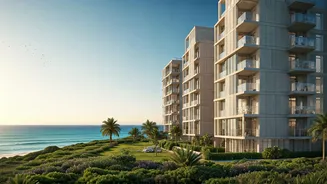
The overarching objective for the development of the entire Mumbai Metropolitan Region (MMR) is to markedly enhance the quality of life for its residents. This vision encompasses enabling individuals to reside in more spacious homes surrounded by open green spaces, even if located further from the traditional city center. Crucially, this expanded living potential is coupled with the promise of seamless and efficient connectivity, ensuring that daily commutes remain manageable and stress-free. The extensive metro network currently under development is a primary enabler of this vision, promising to bridge distances and connect communities across the vast region, thereby fostering a more balanced and livable urban environment.
Metro Network Expansion
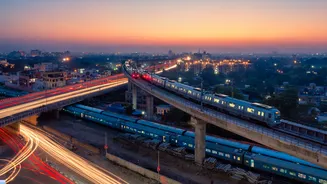
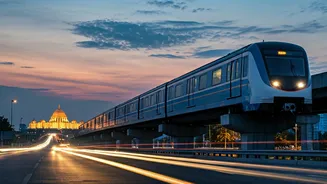
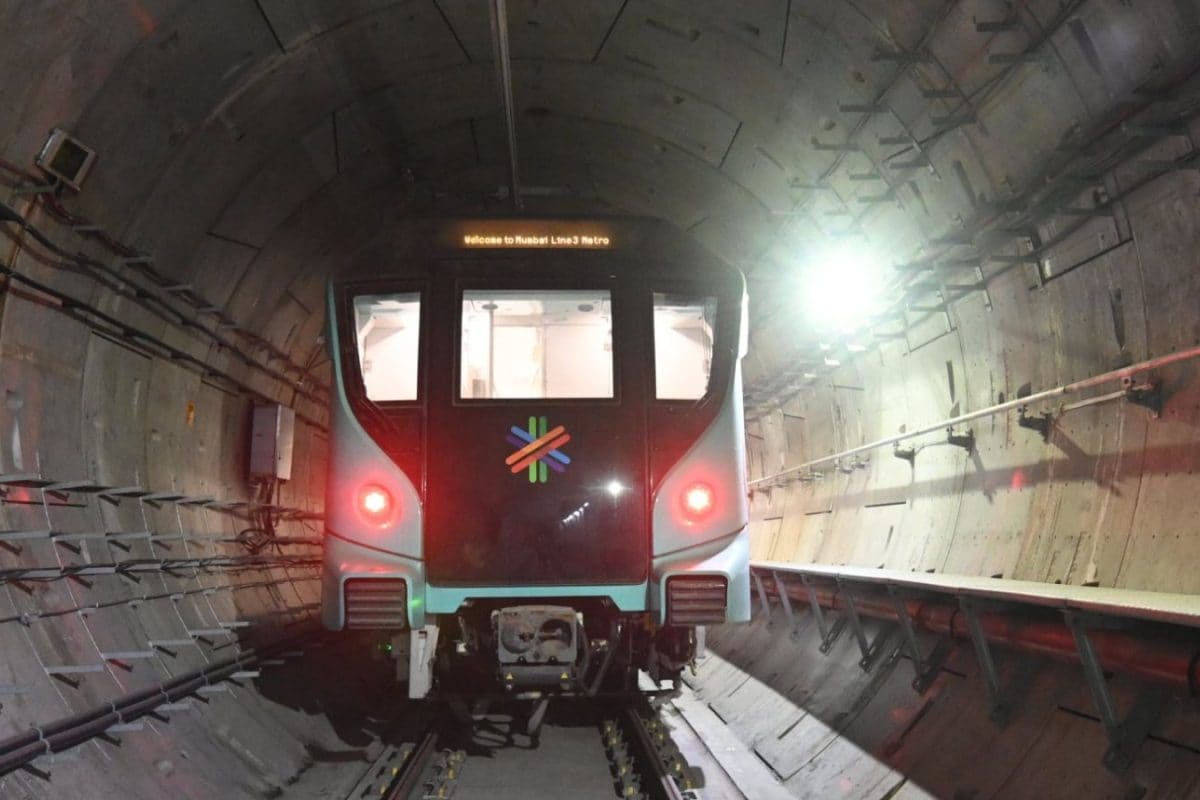
This year marks a significant milestone in the operationalization of multiple new metro lines and extensions within the MMR. Key achievements include the full commissioning of Line 9, connecting Dahisar East to Mira-Bhayandar, and the opening of Phases 1 and 2 of Line 4, stretching from Wadala to Kasarvadavali, specifically the segments from Cadbury Junction to Gaimukh. Additionally, a crucial stretch of Line 2B, between ESIC Nagar and Saraswat, will commence operations. The initial phase of Line 5, linking Thane, Bhiwandi, and Kalyan, is also slated for public use. While efforts are progressing for Line 6 (Swami Samarth Nagar to Vikhroli), its opening is anticipated in early 2027, contingent upon the Kanjurmarg depot's readiness, though essential track work is ongoing. Furthermore, the critical tunneling for Line 7A, extending to the Chhatrapati Shivaji Maharaj International Airport's T2 terminal, has been successfully completed, with other associated construction works in progress.
Infrastructure Project Pipeline
Beyond the metro network, several other substantial infrastructure projects are progressing towards completion. The final segment of the Santacruz-Chembur Link Road (SCLR) extension is expected to be operational before the monsoon season begins. Significant tunneling activities are set to commence, including the second tunnel for the Orange Gate project, and all four tunnel boring machines (TBMs) for the ambitious Thane-Borivali twin tunnels will begin their excavation work. Meanwhile, detailed project reports (DPRs) for Metro Lines 10, 13, and 14 are awaiting final approval from the Urban Development Department. Once these reports receive the necessary clearance, the tendering process for these new lines will be initiated, further expanding the region's public transportation capabilities.
Monorail & Pod Taxi
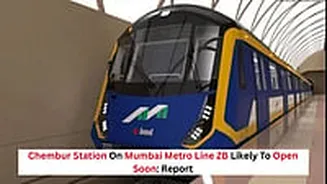
The Mumbai Monorail is scheduled to resume its services imminently, coinciding with the opening of the Chembur station on Metro Line 2B. The temporary suspension was a precautionary measure undertaken to obtain mandatory safety approvals from the Independent Safety Assessor (ISA) and a retired Chief Commissioner of Railway Safety (CMRS) officer, a process not typically required for monorail systems. Regarding the pod taxi project, while it shares an experimental nature with the monorail, it operates on a distinctly different model. Notably, no MMRDA funds are being invested in the pod taxi initiative. In parallel, MMRDA is actively promoting enhanced walkability in BKC by encouraging buildings and offices to dismantle previously erected compound walls. This move aims to reclaim pedestrian space and reduce sidewalk congestion, though it relies on voluntary cooperation due to prior permissions granted for these structures.
Subterranean Network Plan
A comprehensive subterranean tunnel network, referred to as 'Pataal Lok,' is a long-term strategic development plan for the region. This ambitious project comprises multiple critical links designed to decongest traffic and enhance connectivity across diverse areas. The planned tunnels include the Coastal Road tunnel, the Thane-Borivali twin tunnels, the Orange Gate to Marine Drive tunnel, the Goregaon-Mulund Link Road tunnel, the Gaimukh tunnel, and the BKC tunnel. These underground passages are intended to significantly improve transit efficiency and accessibility throughout the metropolitan area, addressing future mobility needs.
User-Pays Funding Model
The financing of these extensive infrastructure projects, including the tunnel networks, will primarily adhere to a 'user must pay' principle. While various funding models are being explored, such as land monetization and hybrid approaches, the core philosophy recognizes that MMRDA raises debt to finance these developments. Consequently, lenders rigorously assess repayment strategies before approving loans, making tolling a likely component for many of these projects. This approach ensures financial sustainability and the responsible management of borrowed funds, aligning project revenues with their development costs.
Subcontractor Oversight
MMRDA maintains a strict oversight on its contractors, even though direct control over subcontractors is limited. In a recent incident, the welder involved in cutting interlocks on a metro slab was found to be employed by a contractor at a level below the direct subcontractor. Despite this, MMRDA has been consistently imposing heavy penalties for safety and quality lapses. As an example, following a crane toppling incident in BKC during work on Metro Line 2B, the contractor, J Kumar, was fined Rs 1 crore. The authority emphasizes its robust enforcement of penalties, distinguishing itself from other bodies that may not apply such stringent measures consistently.
Regional Eye Bank Initiative
In a significant stride towards enhancing healthcare services, MMRDA is establishing Asia's largest eye bank, which will be the third in Mumbai. This state-of-the-art facility, located at the Cooper Hospital in Juhu, is equipped with advanced technology for processing and preserving donated corneas. The primary objective is to substantially increase the availability of corneas for transplantation, thereby reducing waiting lists for visually impaired individuals and offering them renewed hope. A considerable budget has been allocated for personnel training, acquiring cutting-edge equipment, and establishing a robust logistical network to ensure timely retrieval and distribution of donated eyes. This initiative represents a major advancement in organ donation and transplantation efforts within the region.