






The Spark of Unrest
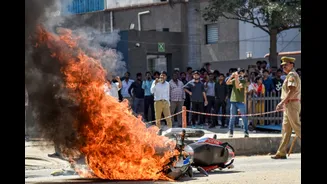
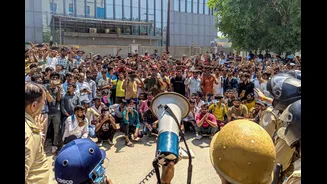
The recent wave of protests that swept through Noida, and indeed other industrial hubs, was not a sudden eruption but rather the culmination of a prolonged
period of economic neglect. While labor productivity has seen significant growth over the past decade, real wages for workers have remained largely stagnant. The immediate catalyst for the demonstrations on April 13 and 14 appears to have been the announcement of a minimum wage hike in neighboring Haryana on April 9, coupled with the sharp inflationary pressures driven by the conflict in West Asia, which has disproportionately affected the cost of essential goods like LPG. However, these immediate triggers are merely symptoms of deeper structural issues that have been brewing for years, making the workers' demands for fair compensation and improved living conditions increasingly urgent and justifiable, leading to widespread discontent across various sectors.
Flawed Wage Structures
A critical examination of the minimum wage (MW) system reveals fundamental shortcomings that contribute significantly to worker dissatisfaction. The MW is composed of a basic pay component and a dearness allowance, which is meant to adjust for inflation. While dearness allowances have been updated periodically, the basic pay in Haryana was last revised in 2015, and in Uttar Pradesh in 2014. Despite regulations stipulating a revision of the basic component every five years, this has been largely overlooked. Consequently, workers have not benefited from the productivity gains they have generated over the past decade. Furthermore, the Consumer Price Index (CPI), often used to measure average inflation, fails to accurately reflect the escalating costs in essential segments like housing, healthcare, and education. Studies indicate that real wages in Noida and Faridabad, the epicenters of these protests, have actually declined between 2021 and 2026, highlighting a severe disconnect between the cost of living and worker compensation.
The Housing Cost Crisis
The inadequacy of the current minimum wage calculation is starkly highlighted by the lived experiences of countless workers, many of whom report that rent alone consumes a third to half of their monthly income. This reality is grossly underestimated in the MW calculation, where the housing component is derived by considering a mere 10 percent of expenditure on food and clothing. This methodology results in a severe underestimation of the actual cost of shelter, particularly in areas surrounding major metropolitan centers. The absence of a National Floor Wage (NFW), determined by objective criteria, further exacerbates the problem, as state governments are obligated to set their MWs above this floor. The current system, therefore, fails to ensure that workers can meet their basic subsistence needs, a primary driver of the ongoing protests, alongside other concerns about working conditions and fair treatment.
Escalating Demands
The recent wage hikes in Haryana (35 percent) and Uttar Pradesh (21 percent) following the protests signal an implicit acknowledgment by state governments of the inadequacy of previous wage structures. However, these increases have not fully appeased the workers. In Haryana, labor unions are now demanding a minimum wage of Rs 23,196, indicating that the initial hike was insufficient. Similarly, workers in Uttar Pradesh find the 21 percent increase unsatisfactory, especially when compared to the larger raise in Haryana, despite both regions being part of the National Capital Region (NCR) and experiencing similar living costs. These ongoing negotiations underscore the persistent gap between the workers' earnings and their ability to meet their essential needs, suggesting that the current wage revisions, while a step in the right direction, do not fully address the depth of the economic hardship faced by the workforce.
Beyond Noida's Borders
The unrest in Noida is not an isolated incident but part of a broader pattern of labor discontent across India. Prior to the Noida demonstrations, significant labor agitations occurred in places like Barauni (Bihar), Surat (Gujarat), and Manesar and Panipat (Haryana), all demanding higher wages, improved overtime pay, and better working conditions. Even as factory workers protested in Noida, domestic workers took to the streets for their own wage revisions. Furthermore, gig workers went on strike in December 2025, advocating for fair pay and the discontinuation of the '10-minute delivery' model. These widespread actions across diverse sectors and regions indicate that workers nationwide are struggling to survive at the subsistence level, necessitating proactive measures to address their grievances before they escalate into widespread industrial action.
Path to Industrial Peace
To prevent future industrial disruptions and foster a stable economic environment, sustained tripartite dialogue involving the government, employers, and workers is indispensable. This collaborative approach is crucial for addressing worker grievances proactively and maintaining industrial harmony. Ignoring these critical issues is likely to result in further discontent spilling over into public demonstrations, disrupting productivity and potentially deterring investment. Conversely, stable industrial relations are highly beneficial for businesses, as economic growth and investment thrive in an environment of peace and cooperation, rather than in the face of recurring unrest. Embracing this collaborative path forward is essential to ensure that the benefits of development, such as major infrastructure projects like an international airport in Noida, are not undermined by persistent labor disputes.