




Manipur's Lifeline Lake
Situated in the heart of Manipur, Loktak Lake stands as Northeast India's most expansive freshwater body, vital to the region's life and identity. Its
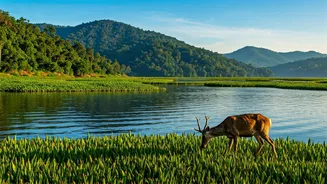
vast, shimmering expanse provides essential resources for local communities through fishing and irrigation, while its distinctive beauty captivates all who visit. The lake's surface is adorned with vibrant green patches, contributing to its allure and its role as the state's primary source of sustenance and water. Beyond its practical importance, Loktak Lake is a stunning natural spectacle, a true jewel that sustains both nature and the people who call its shores home.
The Enchanting Phumdis
The most striking feature of Loktak Lake is its legendary 'phumdis,' which are naturally formed floating islands. These are not mere vegetation mats; they are substantial, spongy conglomerations of soil, decaying organic matter, and plant life, creating substantial landmasses that drift across the water's surface. A significant portion of each phumdi lies submerged, much like an iceberg, making them buoyant and dynamic. Some of these phumdis have grown so large over time that local fishermen have established entire dwellings and small-scale agricultural plots upon them, demonstrating an extraordinary symbiosis between human life and this unique aquatic environment.
Life on Floating Homes
Humanity has found a remarkable way to coexist with Loktak Lake's floating landscape. Local fishing communities construct their homes on smaller phumdis, creating floating huts known as 'phumsangs.' These settlements are a testament to a traditional lifestyle deeply intertwined with the lake's natural cycles. The inhabitants engage in sustainable fishing practices, their lives dictated by the gentle ebb and flow of the water and the movement of the phumdis. This human presence adds a unique cultural dimension to the lake's surreal, aquatic scenery, showcasing a harmonious blend of tradition and nature.
World's Only Floating Park
Spanning approximately 40 square kilometers on the southeastern edge of Loktak Lake, the Keibul Lamjao National Park holds a globally unique distinction: it is the planet's only national park that floats. This remarkable natural reserve was established with the crucial objective of safeguarding its delicate and specialized ecosystem. The entire park exists upon a colossal phumdi, whose elevation fluctuates in tandem with the lake's water levels. This constant motion and its entirely aquatic foundation make Keibul Lamjao an unparalleled wetland wonder, a testament to nature's innovative adaptability.
A Unique Wetland Habitat
The floating meadows of Keibul Lamjao National Park cultivate an environment that is spectacularly distinct from any other wetland on Earth. These buoyant phumdis offer essential grazing areas, secure shelter, and vital breeding grounds for the park's diverse wildlife populations. The park's surface undergoes continuous transformation due to the seasonal shifts in water levels, which cause the phumdis to expand, contract, and rearrange themselves. This dynamic, ever-changing character imbues the park with an ethereal and captivating quality, constantly reshaping its appearance and ecological dynamics.
Home of the Dancing Deer
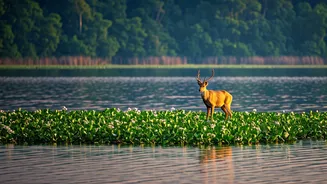
Keibul Lamjao National Park serves as the definitive final natural sanctuary for the critically endangered Manipur brow-antlered deer, known locally as the 'Sangai.' These elegant creatures, affectionately dubbed the 'dancing deer,' navigate the spongy, uneven terrain of the phumdis with extraordinary grace. Their delicate hooves are perfectly adapted to this unique floating landscape, allowing them to move with agility. Once believed to be extinct, the Sangai has become a powerful symbol of conservation success and is proudly designated as the state animal of Manipur.
Rich Natural Tapestry
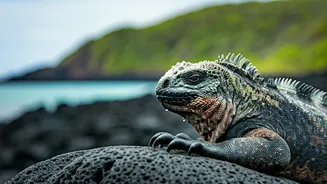
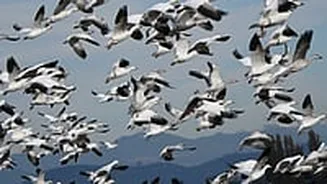
Beyond its most famous resident, the Sangai, Loktak Lake and its surrounding national park teem with a wealth of biodiversity. The park also provides refuge for hog deer and otters, while the lake becomes a bustling hub for numerous waterfowl and migratory birds, particularly during the winter months. The phumdis themselves are fertile grounds for a variety of aquatic plants and small animals, contributing significantly to the ecological richness of Loktak. Recognized as a vital Ramsar wetland site, its international importance is undeniable, supporting both the intricate web of nature and the livelihoods of the local populace.
A Treasured Ecosystem
As a site considered for UNESCO World Heritage status, Loktak Lake and Keibul Lamjao National Park face significant environmental pressures. Challenges such as fluctuating water levels, pollution from various sources, and increasing habitat stress threaten its delicate balance. The preservation of this extraordinary jewel of Manipur is paramount for the continued survival of the Sangai deer and the unique ecosystem it inhabits. Those who visit Loktak Lake depart with indelible memories of a truly exceptional natural wonder, a testament to nature's most extraordinary creations.