





A Fading World
For Sarvjeet Kaur, a schoolteacher in Fatehgarh Sahib, the vibrant sounds of her classroom—the eager questions, the cheerful chatter, the rustle of books—had
slowly receded into an unnerving quiet. Months of struggling to comprehend her students' words turned her profession into a daily battle. Simple interactions, like asking a student to repeat themselves or engaging in conversations with colleagues, became arduous. This progressive hearing impairment began to erode not only her professional efficacy but also her self-assurance, leading her to feel inadequate in her role as an educator.
Seeking a Solution
After conventional hearing aids failed to provide adequate relief and treatments at various centers proved unsuccessful, Sarvjeet Kaur sought help at the Government Medical College and Hospital (GMCH) in Chandigarh. Senior ENT specialist Dr. Surinder K. Singhal and his team evaluated her complex case. Initially, surgery was performed due to a perforated eardrum, possibly from a prior intervention, which offered some improvement. A hearing aid was fitted, but its effectiveness waned over time, leaving Kaur with limited viable options. The medical team then proposed a more advanced solution: the Osia-3 system, a sophisticated bone-anchored hearing device.
The Osia-3 Innovation
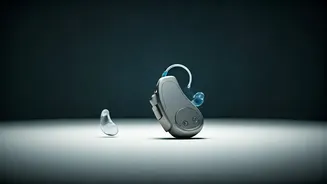
The Osia-3 system represents a significant leap in hearing technology, operating as part of a Bone-Anchored Hearing System (BAHA). Unlike traditional hearing aids that channel amplified sound through the ear canal, the Osia-3 utilizes digital technology to transmit sound vibrations directly to the inner ear via the skull bone. This innovative approach bypasses any damage in the outer or middle ear, making it exceptionally effective for individuals with conductive or mixed hearing loss, and certain cases of single-sided deafness. The successful implantation surgery at GMCH-32 paved the way for Kaur's auditory rehabilitation.
A World Reawakened
Four weeks post-surgery, the Osia-3 system was activated, marking a profoundly emotional moment. The sudden clarity of sound was overwhelming, described by Kaur as a miracle. For a teacher, effective communication is paramount, and the ability to hear her students clearly has revitalized her career and personal life. Beyond the classroom, she can now enjoy films without relying on lip-reading, understanding dialogues with ease, and cherishes the rediscovery of everyday sounds, such as prayers at the gurdwara, allowing her to engage with everyone without hesitation. This restored hearing has given her a renewed sense of confidence and connection.
Advanced Care Accessibility
Dr. Singhal highlighted that the Osia-3 system is not only more powerful and discreet than earlier bone-anchored devices, but its availability at a government hospital is a critical development. This ensures that advanced auditory rehabilitation technologies are accessible to individuals from all socioeconomic backgrounds. By directly transmitting sound to the cochlea, the system bypasses ear canal and middle ear obstructions, delivering superior sound quality and boosting patient confidence due to its subtle design. This initiative underscores a commitment to inclusive healthcare and technological advancement in audiology.