







Drone Threat Neutralized
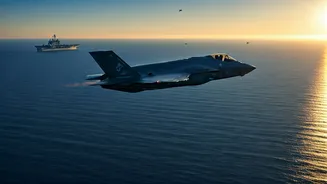
In a tense encounter within the Arabian Sea, an advanced US F-35 fighter jet took decisive action to safeguard the aircraft carrier USS Abraham Lincoln
and its crew. The Iranian Shahed-139 drone reportedly maneuvered aggressively in close proximity to the carrier, prompting a self-defense response from the F-35C. Navy Captain Tim Hawkins of US Central Command confirmed the incident, emphasizing that the drone's actions necessitated its elimination to ensure the safety of personnel and equipment aboard the carrier. Fortunately, no American service members sustained injuries, and no US naval assets were compromised during this critical moment. This event unfolded against a backdrop of ongoing diplomatic initiatives aimed at re-establishing nuclear talks between Iran and the United States, a situation further complicated by President Donald Trump's stern warnings regarding potential negative outcomes should a deal not materialize, especially as US warships were being repositioned closer to Iran.
Regional Buildup & Standoff
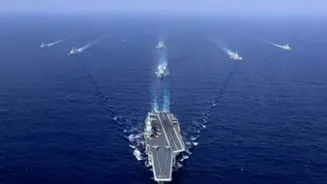
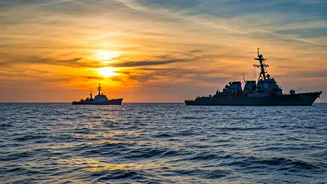
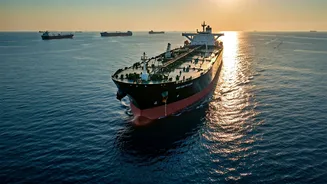
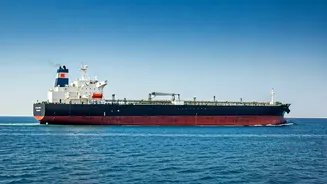
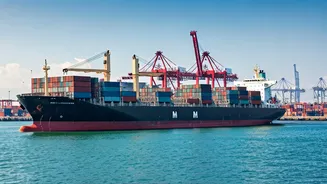
The presence of the Abraham Lincoln carrier strike group in the Middle East represents a significant US military augmentation in the region. This deployment was initiated following Iran's severe crackdown on domestic anti-government protests, which resulted in the deadliest unrest since the 1979 revolution. While President Trump initially opted against direct military intervention in Iran's internal suppression of dissent, he has since shifted focus to demanding nuclear concessions from Tehran. As a show of leverage, the US has dispatched warships towards Iran's coastline. Recent statements from President Trump indicated that Iran was "seriously talking" about a potential agreement, a sentiment echoed by top Iranian official Ali Larijani, who confirmed that negotiations were indeed in the process of being arranged. This delicate diplomatic dance was underscored by a separate incident hours later in the Strait of Hormuz, where Iran's Revolutionary Guard reportedly harassed a US-flagged merchant vessel, the M/V Stena Imperative, with IRGC boats and a Mohajer drone threatening to board and seize the ship, as reported by Captain Hawkins of US Central Command.
Diplomacy Meets Confrontation
The ongoing friction between the United States and Iran has been simmering for months, largely fueled by the stalled nuclear talks and Iran's assertive regional activities. White House Press Secretary Karoline Leavitt corroborated the F-35's engagement with the Iranian drone near the Arabian Sea, stating that CENTCOM's decision to engage was based on the unmanned aerial vehicle's aggressive posture towards the USS Lincoln. Despite these direct confrontations, President Trump has maintained a commitment to prioritizing diplomatic solutions. However, he has also underscored that successful diplomacy requires reciprocal engagement from both sides. Tensions within Iran had dramatically escalated the previous month due to widespread anti-regime demonstrations, which were met with a violent response from security forces, leading to numerous fatalities and widespread international condemnation. President Trump, while refraining from military action at that time, issued warnings of future repercussions and subsequently demanded nuclear concessions from Tehran as a prerequisite for restarting negotiations. The deployment of the Abraham Lincoln carrier strike group and other naval assets near Iran's coast served as a strategic maneuver to exert pressure. While President Trump's recent comments suggested a willingness from Iran to engage in discussions, the overarching situation highlights a precarious balance between de-escalation efforts and the reality of escalating direct confrontations.