





Magnetic Magic Explained
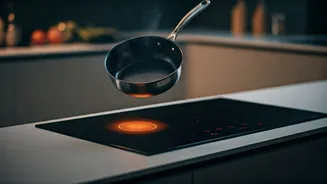
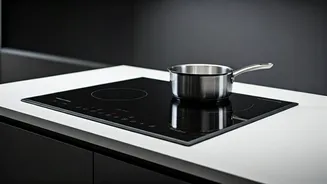
Induction cooktops represent a significant departure from traditional stoves that rely on open flames and combustion. Instead, they employ the principle
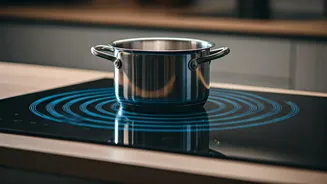
of electromagnetic induction to generate heat. Beneath the smooth glass or ceramic surface lies a coil of copper wire. When the cooktop is activated, an alternating current flows through this coil, creating a rapidly oscillating magnetic field that extends directly above the cooking surface. This magnetic field is unique because it passes through the glass without heating it, meaning the cooktop itself remains relatively cool, only getting warm from direct contact with the heated cookware. This fundamental difference in heat generation makes induction cooking distinct and, in many ways, superior to older methods.
Cookware Compatibility Secrets
The reason certain pots and pans work with induction while others don't is rooted in their material composition and its interaction with magnetic fields. Induction technology is most effective with ferromagnetic materials, such as cast iron and specific types of stainless steel. These materials are drawn to magnets. When a compatible pan is placed on the cooktop, the fluctuating magnetic field interacts with the metal base. This interaction induces electrical currents within the pan itself, a phenomenon described by Faraday's Law of Induction. It's this internal generation of current within the cookware that ultimately leads to heat. Cookware designed for induction often features a specialized base, specifically engineered to maximize this magnetic response and ensure efficient heat transfer.
Heating Through Resistance
Once the electrical currents, known as eddy currents, are generated within the base of the ferromagnetic pan, the cooking process truly begins. Unlike perfect conductors, materials like iron possess inherent electrical resistance. As these eddy currents flow through the molecular structure of the pan's base, they encounter this resistance. This interaction creates friction at an atomic level, converting the kinetic energy of the moving electrons directly into thermal energy, or heat. This principle is explained by Joule's Law of Heating, which quantifies the heat generated based on the electrical current, the material's resistance, and the duration of power application. Notably, the relationship between current and heat is not linear; increasing the current has a squared effect on heat output, meaning even small increases in electrical flow can significantly boost temperature.
Energy Efficiency Gains
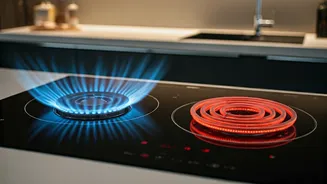
The efficiency of induction cooking is one of its most compelling advantages. Because the pan itself becomes the direct source of heat, energy transfer is exceptionally precise. Induction cooktops are capable of converting approximately 85% to 90% of the electrical energy they consume directly into cooking heat. This stands in stark contrast to traditional LPG stoves, which typically achieve efficiencies of only 40% to 50%. In gas cooking, a substantial amount of heat dissipates into the surrounding air, a loss that is largely eliminated with induction. This targeted heating ensures that energy is used effectively, making induction a faster, safer, and more sustainable cooking method, especially relevant in contexts where energy sources can be volatile.