






A New Cosmic Atlas
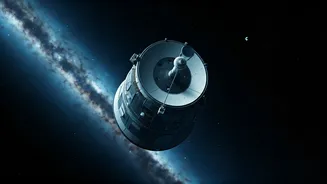
NASA is introducing a powerful new tool, the Roman Space Telescope, designed to provide humanity with an unprecedented view of the cosmos. This instrument,
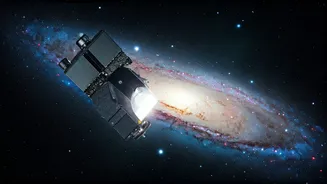
named in honor of astronomer Nancy Grace Roman, a pioneer in space telescope development, represents a significant leap in our ability to observe the universe. Its primary mission is to generate a comprehensive map of celestial objects, revealing billions of galaxies, countless stars, and an abundance of exoplanets. The telescope's advanced capabilities will allow scientists to identify and catalogue these cosmic entities on a scale never before possible, effectively creating a new atlas of the universe that will guide future astronomical research and potentially answer fundamental questions about our place in the vastness of space.
Exoplanet Expedition
One of the Roman Space Telescope's most exciting objectives is its profound impact on exoplanet discovery. It is projected to identify tens of thousands of planets orbiting stars beyond our solar system. This vast number will provide scientists with invaluable data to understand the prevalence and diversity of planetary systems throughout the galaxy. By analyzing these newly discovered worlds, astronomers hope to gain crucial insights into the conditions that favor planet formation and potentially identify habitable environments. The sheer volume of exoplanets Rome will detect will offer a statistical foundation for comprehending how common or rare Earth-like planets might be, significantly advancing the search for extraterrestrial life.
Probing Dark Matter
Beyond cataloging visible celestial bodies, the Roman Space Telescope is uniquely equipped to tackle some of the universe's most profound enigmas: dark matter and dark energy. These mysterious components are thought to comprise approximately 95% of the universe's total mass-energy, yet their nature remains largely unknown. Dark matter is theorized to provide the gravitational scaffolding that holds galaxies together, while dark energy is responsible for the accelerating expansion of the universe. Roman's infrared vision will enable it to observe ancient light, effectively looking back in time to study how dark matter has structured itself across cosmic epochs and to precisely measure the rate at which galaxies are moving apart, offering critical clues to understanding these invisible forces that shape the cosmos.
Technological Marvel
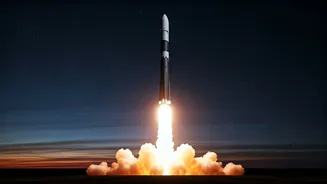
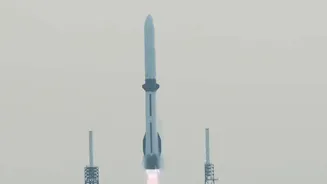
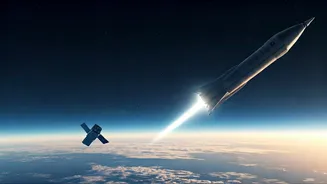
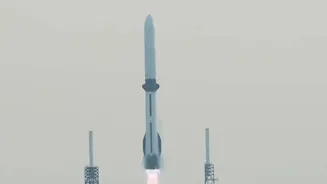
The Roman Space Telescope is a testament to human ingenuity and dedication, with over a decade of development and an investment exceeding $4 billion. This impressive instrument boasts a 12-meter (39-foot) structure, distinguished by its silvery appearance and expansive solar panels, which will power its extensive operations. Once launched aboard a SpaceX rocket, anticipated for September at the earliest, it will position itself 1.5 million kilometers (930,000 miles) from Earth. Its field of view is at least 100 times larger than that of the Hubble Space Telescope, allowing it to sweep across vast cosmic territories. The telescope is designed to transmit a staggering 11 terabytes of data daily, promising to deliver more information in its first year than Hubble has throughout its entire mission.