






Sudoku Basics Explained
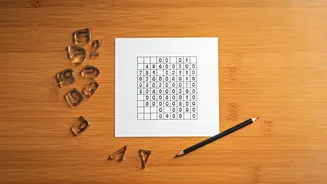
Sudoku is a captivating number-placement puzzle that challenges your logical reasoning. The objective is straightforward: fill a 9x9 grid with digits so that each
column, each row, and each of the nine 3x3 subgrids contains all of the digits from 1 to 9. Easy Sudoku puzzles are designed for newcomers, featuring fewer pre-filled cells and offering more obvious deductions. The beauty of Sudoku lies in its pure logic; no mathematical ability is required, only the capacity to observe patterns and make deductions. Each puzzle starts with a partially filled grid, and your task is to uncover the missing numbers. Understanding the core rule – no repetition within rows, columns, or 3x3 boxes – is the foundational step. As you progress, you’ll find yourself anticipating where certain numbers must go, a rewarding feeling that comes with consistent practice and a growing familiarity with the game's structure.
Simple Solving Techniques
For easy Sudoku puzzles, several elementary techniques can significantly speed up your solving process. The most fundamental is the 'naked single' or 'elimination' method. Scan each row, column, and 3x3 box for numbers that are already present. Then, for each empty cell, consider which digits are missing from its row, column, and box. If only one digit remains as a possibility for that cell, then that digit must be the correct one. Another useful approach is 'hidden singles'. This involves looking at a specific row, column, or box and focusing on a single digit (e.g., the number 5). If, within that unit (row, column, or box), there is only one cell where the digit 5 can possibly be placed, then that cell must contain the 5, even if other numbers could theoretically go there. By systematically applying these simple techniques, you can efficiently fill in many cells and make significant progress towards completing the puzzle.
Beginner's Strategy Tips
Approaching easy Sudoku puzzles with a clear strategy can make the experience more enjoyable and less daunting. Start by scanning the grid for rows, columns, or 3x3 boxes that are already mostly filled. These often contain the most straightforward deductions. As you fill in numbers, immediately cross-reference them to eliminate possibilities in intersecting rows, columns, and boxes. Don't be afraid to pencil in potential candidates for cells; this can be helpful when more complex deductions are needed, though for easy puzzles, direct placement is often sufficient. A crucial tip for beginners is to be patient and avoid guessing. If you're stuck, step away for a moment and return with fresh eyes. Often, a new perspective will reveal a deduction you previously missed. Celebrating small victories, like filling a whole row or box, can also maintain motivation as you build your Sudoku-solving confidence.