





The AI Chip Imperative
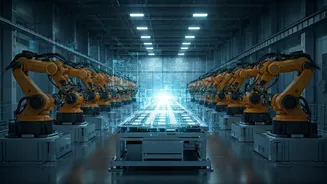
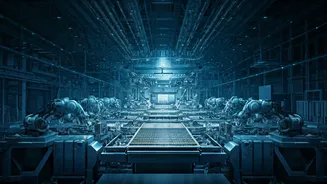
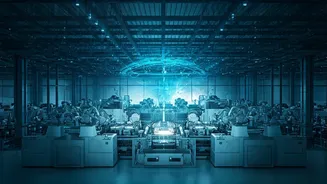
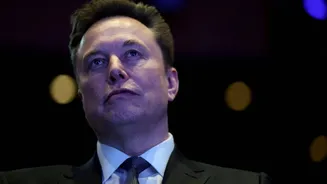
Elon Musk is spearheading the creation of a vast semiconductor manufacturing plant, christened 'Terafab,' located near Tesla's headquarters in Austin,
Texas. This facility is envisioned as a critical component for fueling the rapid advancements across his diverse companies, including Tesla, SpaceX, and xAI, which are heavily reliant on cutting-edge AI and robotics technologies. The decision stems from a perceived bottleneck in the semiconductor supply chain, which Musk believes is not evolving quickly enough to meet the insatiable demand generated by his projects. He has articulated that building this in-house fabrication capability is not just a preference but a necessity for continued progress, stating, "We either build the Terafab or we don’t have the chips, and we need the chips, so we build the Terafab." This proactive approach aims to secure a steady and ample supply of custom-designed chips, essential for everything from autonomous driving systems and humanoid robots to complex orbital data center networks. The scale of this endeavor highlights the strategic importance Musk places on controlling hardware production to maintain a competitive edge in the rapidly advancing field of artificial intelligence.
A Dual-Purpose Production Hub
The 'Terafab' facility is poised to become a dual-purpose powerhouse, manufacturing two distinct types of advanced chips crucial for Musk's ventures. A significant portion of its output will be dedicated to producing chips optimized for edge computing and inference tasks. These specialized semiconductors are slated for deployment in applications demanding immediate data processing and decision-making, such as Tesla's autonomous driving systems and its emerging Optimus humanoid robots. Simultaneously, the facility will also churn out high-power chips designed for the ambitious orbital data center initiatives spearheaded by SpaceX and xAI. These chips are intended to power a constellation of data centers in space, facilitating massive computational capabilities beyond Earth's atmosphere. Musk indicated that xAI will be the primary consumer of these chips, underscoring the centrality of this project to the broader AI ecosystem he is cultivating. The facility is projected to eventually achieve an output capable of delivering a terawatt of computing power annually, a testament to its immense scale and the ambitious vision it serves.
Orbital Data Centers Vision
Beyond terrestrial applications, 'Terafab' plays a pivotal role in Elon Musk's grand vision for orbital data centers. This initiative aims to establish a robust network of data processing facilities in space, beginning with a compact 'mini' AI data center satellite designed to deliver 100 kilowatts of computing power. Each of these orbital centers is intended to be scalable to megawatt-range capacities, forming a distributed computing infrastructure in orbit. This ambitious project aligns with SpaceX's broader objectives, including potentially launching satellites from the lunar surface as part of a long-term strategy for expansive space infrastructure. Musk has already initiated regulatory processes, seeking a license from the US Federal Communications Commission (FCC) to deploy one million data center satellites around Earth, a proposal that has encountered some opposition. The development of these orbital data centers is also linked to SpaceX's substantial fundraising efforts, signaling their significance in the company's future valuation and expansion plans.