









A Francophile Maharaja
Maharaja Jagatjit Singh of Kapurthala, born in 1872, was a pioneering figure who masterfully united the regal traditions of Punjab with the sophisticated
circles of Parisian society. His fascination with French culture began early; he became fluent in the language and embraced a lifestyle that elegantly merged Indian heritage with European refinement. Long before international luxury brands established a presence in India, the Maharaja was already a devoted and pivotal patron. His extensive travel ensemble famously included over 60 specially commissioned trunks, meticulously designed to accommodate a diverse range of items, from ceremonial regalia like swords and turbans to personal effects such as European footwear and grooming essentials. This collection, estimated today to be worth between Rs 30 to 60 crore, underscored his royal authority and served as a practical necessity for his frequent international journeys, demonstrating a remarkable foresight in luxury patronage.
Palatial European Echoes
The Maharaja's profound admiration for France extended far beyond his personal possessions; it was vividly manifested in the architectural marvel he commissioned in the heart of Punjab. Taking inspiration from the grandeur of the Palace of Versailles and the historic Château de Fontainebleau, he initiated the construction of the magnificent Jagatjit Palace in Kapurthala. This edifice was designed in the French Renaissance style, complete with distinctive mansard roofs and a meticulously laid-out park that resembled a scaled-down version of the Jardin des Tuileries. The palace stood as a tangible embodiment of his deep-seated affection for French aesthetics. Within its opulent confines, he frequently hosted elaborate banquets, attended by skilled European chefs, cultivating a unique royal court that distinguished him within the context of British India and showcased a remarkable fusion of cultures.
A Royal Romance
Maharaja Jagatjit Singh's personal life was as captivating and dramatic as his regal surroundings, particularly highlighted by a celebrated cross-cultural romance that garnered international attention and some scandal. During a royal wedding held in Madrid in 1905, he found himself deeply enamored with Anita Delgado, a spirited 17-year-old Flamenco dancer. His persistent and passionate courtship, marked by romantic gestures including letters adorned with diamonds and floral tributes, eventually led her to India. Upon her arrival, she embraced Sikhism and was subsequently crowned Maharani Prem Kaur. Their union became a powerful symbol of unconventional love and cultural fusion, harmoniously intertwining the vibrant spirit of Spain with the profound grandeur and opulence of Indian royalty, creating a legend that resonated across continents.
Jewels of Distinction
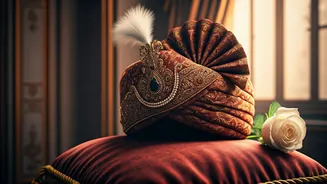
In the realm of haute joaillerie, the Maharaja of Kapurthala was a formidable presence, whose distinctive commissions continue to be referenced in the historical archives of esteemed jewelry houses such as Cartier and Mellerio. He was particularly renowned for his exquisite "peacock aigrette," an extraordinary creation fashioned from gold and enamel, embellished with an astonishing 1,742 rose-cut diamonds. He famously adorned his turban with this breathtaking piece. Furthermore, he engaged in direct collaboration with Cartier to design a spectacular platinum sarpech, distinguished by a prominent central hexagonal emerald that weighed an impressive 177.40 carats. These remarkable pieces transcended mere adornment; they represented artifacts from an era when Indian monarchs set the definitive standards for global luxury and unparalleled craftsmanship, leaving an indelible mark on the history of fine jewelry.