






Strength's Shifting Meaning
The perception of a 'strong woman' has evolved significantly. Historically, it signified a woman who fought for and earned her place in a world dominated
by men, celebrating achievements in education, careers, and financial autonomy. These were hard-won battles. However, this complimentary term has gradually transformed into a societal expectation. Instead of pure admiration, the label now often implies an unfaltering ability to manage any challenge without complaint or the need for assistance. It’s as if the world assumes such women will simply 'handle it all.' This shift turns powerful positive attributes into what feel like disclaimers, suggesting a woman's capacity to cope, rather than her inherent resilience. Conversations with women reveal a deep appreciation for these qualities, yet also a palpable frustration that strength is perceived as an absence of need, rather than a tool for navigating difficulties.
Vulnerability Beyond Strength
A significant consequence of the 'strong and independent' label is the perceived lack of space for vulnerability. When a woman chooses a demanding career, like that of a doctor, her dedication and hard work are acknowledged, but the societal interpretation often leans towards her being an outlier or even a 'villain' for prioritizing her ambitions. This leads to an unspoken pressure to never show weakness or admit when the workload becomes overwhelming. It's crucial to understand that strength and vulnerability are not mutually exclusive; they coexist. Resilience is not the absence of struggle, but the capacity to persevere despite it. Just like anyone else, women deeply value being understood, cared for, and supported, especially during challenging times. Their independence doesn't negate their need for emotional connection and validation, mirroring the fundamental human need for empathy and assistance that men also experience.
Independence and Withdrawn Support
Within households, the emphasis on women's independence often paradoxically leads to a withdrawal of support, particularly concerning domestic and emotional labor. While women are rightly encouraged to build careers and achieve financial autonomy, the division of household responsibilities and the invisible emotional work of managing a family haven't evolved at the same pace. This creates a scenario where women end up carrying a disproportionately larger burden, while men may still perform the bare minimum. The expectation becomes a dual one: women must be strong and independent while also managing the bulk of domestic duties. When women express strain, the suggested solution isn't always a more equitable distribution of tasks, but rather questioning their need to work at all. This has profound implications, as financial independence influences not just spending power but also a woman's sense of freedom and agency in the world, even when there's no financial pressure.
The Exhausting Double Burden
The modern experience of womanhood is often characterized by a double burden, stemming from how empowerment has been framed. While women appreciate the agency to make their own decisions and achieve financial independence, the internal household expectations have largely remained static. Responsibilities like hosting, meal planning, and maintaining domestic harmony still disproportionately fall on women, even in households that consider themselves progressive. This means that the very empowerment women have fought for has become intertwined with exhaustion. Furthermore, the notion that careers are optional for women often overlooks that work provides more than just income; it's a vital space for creativity, intellectual engagement, and a sense of personal accomplishment. The drive comes not from toiling for external validation, but from meaningful self-fulfillment and contribution.
Emotional Tax of Self-Sufficiency
The emotional toll of being labeled 'strong' often arises not from the tasks themselves, but from the incessant expectation of maintaining composure. This creates a tension for women who love their ambitious careers and personal lives but feel the 'strong, independent woman' moniker has become a mandate to perpetually appear unflappable. The assumption that modern conveniences have eased domestic burdens overlooks the significant 'mental load'— the continuous, unseen work of remembering, planning, and organizing that persists long after professional hours end. The sheer effort required to maintain this facade of constant capability and cheerfulness can be profoundly draining, making even a simple smile an exhausting act on difficult days. This perpetual need to project strength can lead to a significant emotional tax.
Strength Requires Support
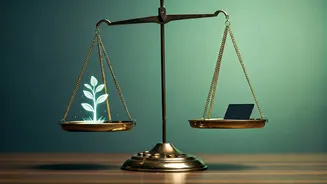
It's clear that women do not wish to relinquish their hard-won independence; progress is non-negotiable. The core issue lies in societal structures that have lagged behind women's evolving roles. While women have been pushed to work, lead, and succeed, the supporting systems—be it in families, workplaces, or social norms—have not fully adapted. True equality necessitates a rebalancing of responsibilities, extending beyond the idea of women simply working to encompass the daily mechanics of life at home and in the workplace. Men must be raised with an expectation of shared domestic and emotional labor, mirroring the balance women have long been expected to maintain. Workplaces celebrating ambitious women must also cultivate robust support networks that enable them to sustain their careers without succumbing to burnout. The fight for independence was not for women to stand alone, but for care, responsibility, and respect to be equitably shared.