




Arvari: Rajasthan's Revival
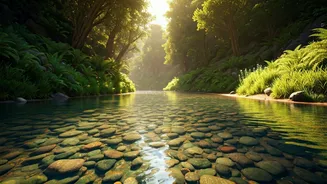
The Arvari River, a testament to community-driven conservation, flows through Rajasthan's Alwar district for approximately 90 km. Once facing severe desiccation,
its revival through dedicated water management efforts has transformed it into a celebrated model for ecological restoration. This remarkable turnaround highlights the potent impact of local initiatives in revitalizing natural water sources, providing crucial support to the region's biodiversity and agricultural needs.
Zuari: Goa's Coastal Lifeline
As one of Goa's principal short waterways, the Zuari River spans roughly 92 km before merging with the Arabian Sea. This westward-flowing river is an indispensable component of Goa's intricate estuarine ecosystem, supporting a rich array of marine and bird life. Its waters are crucial for local fishing communities and contribute significantly to the state's unique coastal environment, making it a cornerstone of Goa's natural heritage and economy.
Mandovi: A Dual-State Artery
The Mandovi River, a vital conduit for both Goa and Karnataka, covers a length of about 77 km. Originating in the lush Western Ghats of Karnataka, it traverses through Goa, serving as a critical artery for transportation, facilitating the movement of goods and people. Furthermore, it underpins the region's vibrant fishing industry and is a significant contributor to tourism, drawing visitors with its scenic beauty and economic importance.
Aghanashini: Unspoiled Flow
Flowing for approximately 121 km, the Aghanashini River in Karnataka stands out as one of India's few major rivers that remain undammed. This commitment to preserving its natural course allows it to empty into the Arabian Sea unimpeded, nurturing exceptionally rich biodiversity. Its free-flowing nature is instrumental in maintaining the health of its aquatic habitats, supporting a diverse range of flora and fauna crucial for the region's ecological balance.
Sharavathi: Home of Jog Falls
Renowned for housing Jog Falls, one of India's highest cascades, the Sharavathi River traverses about 128 km. Emerging from the Western Ghats, this westward-flowing river captivates with its dramatic waterfalls and contributes significantly to the region's natural grandeur. Beyond its aesthetic appeal, the Sharavathi plays a key role in the local water cycle and landscape, making it a celebrated feature of Karnataka's natural heritage.
Palar: Seasonal Flow
The Palar River, characterized by its active flow of approximately 93 km, is a predominantly seasonal waterway that carves its path through Karnataka, Andhra Pradesh, and Tamil Nadu. While its basin encompasses a larger area, its intermittent flow makes it a dynamic feature of the Deccan Plateau. This seasonality influences agricultural practices and water availability, underscoring the challenges and adaptations required in managing water resources in such regions.
Meenachil: Kerala's Livelihood
Stretching for about 78 km, the Meenachil River is a vital artery in Kerala, flowing into the extensive Vembanad Lake. This waterway is intrinsically linked to the daily lives and livelihoods of the local population, serving as a crucial source for agriculture and supporting various traditional practices. Its presence is fundamental to the region's agrarian economy and the sustenance of its communities, highlighting the intimate relationship between people and their rivers.
Kallada: Ghats to Lake
Originating from the Western Ghats and flowing into Ashtamudi Lake, the Kallada River measures around 121 km. This significant waterway is instrumental in powering hydroelectric projects and providing essential irrigation for agricultural lands in its vicinity. Its reliable flow supports both energy generation and the cultivation of crops, playing a dual role in regional development and ensuring water security for its inhabitants.
Tunga: Scenic Tributary
As a key tributary of the Tungabhadra River, the Tunga extends for approximately 147 km. Emerging from the scenic Western Ghats, it is celebrated not only for its relatively clean waters but also for the picturesque landscapes it traverses. The Tunga's journey adds vital volume to the larger Tungabhadra system, contributing to the water resources of the region while enhancing its natural beauty and ecological richness.
Netravati: Coastal Connector
Though slightly longer at around 103 km, the Netravati River is still considered a relatively short yet crucial waterway in Karnataka. This river flows towards the Arabian Sea, emptying near the bustling city of Mangaluru. It is an indispensable source of drinking water for the urban population and plays a significant role in supporting agricultural activities in the surrounding areas, making it a vital component of regional water management.