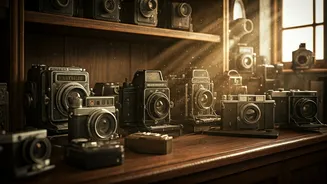







A Historic Photographic Hub
Nestled near CST in Fort, Jivaji Lane, famously known as Camera Gully, boasts a rich history tracing back to the early 20th century. Its origins are tied
to the influx of imported photographic gear through Bombay's active port. By the 1930s, a significant concentration of camera retailers had emerged around D N Road, cementing the lane as a premier destination for all things photographic. This convergence of shops created a vibrant marketplace that attracted enthusiasts and professionals from across the nation. It served as a cornerstone for acquiring cameras, film, and essential processing services during an era when such items were scarce and difficult to procure elsewhere. The area’s development was significantly influenced by establishments like the now-closed Central Camera Company, founded in 1932, which played a crucial role in establishing the lane as one of India’s primary hubs for photographic needs, fostering a unique ecosystem.
The Personal Camera Journey
For many, Camera Gully represents more than just a marketplace; it's a place of personal discovery and memorable firsts. India's first transgender photojournalist, Zoya Thomas Lobo, recounts her initial visit with just Rs 18,000, feeling a mix of trepidation and hope as she sought her first camera. The initial scrutiny from shopkeepers gave way to a welcoming purchase from a second-hand store, marking the beginning of her impactful career. Years later, when she decided to buy a brand-new camera, her path naturally led her back to the same familiar lane, specifically to Vibgyor Photos. She expresses a sentiment of unwavering loyalty, stating that once you experience the personal attention and selection offered in Camera Gully, there's no inclination to explore other options, highlighting the strong customer relationships forged within this specialized market.
Expert Guidance and Relationships
The buying process in Camera Gully was historically characterized by in-depth interaction and personalized advice, a stark contrast to modern transactional sales. Veteran shop owners, like Rajdeep Ved of Vibgyor Photos, established in 1959, emphasize that customers rarely approached them with a specific model in mind. Instead, they sought guidance, articulating their photographic aspirations. Ved explains that his role was to understand the intended use – what the customer planned to photograph – before recommending the most suitable equipment. This consultative approach wasn't just about making a sale; it was about ensuring the customer acquired a product they would actually use and appreciate. He states a preference for not selling a camera if he felt it would end up unused, underscoring a commitment to customer satisfaction and responsible sales practices that built lasting trust and loyalty among patrons.
A Full-Service Ecosystem
Camera Gully’s comprehensive offerings extended far beyond just camera sales, creating a complete photographic ecosystem that supported customers at every stage. Shops in the lane provided essential services such as film processing for both black and white and color film, alongside darkroom facilities. Vibgyor Photos, for instance, was a major collection center for Kodak film and even housed what was reportedly India's first air-conditioned studio on its upper floor. This integrated approach meant that customers could get their film developed, prints made, and cameras repaired all within the same vicinity. This all-encompassing support system facilitated a seamless workflow for photographers, from capturing images to producing final prints, fostering a deep reliance on the gully for all their photographic needs, reinforcing its status as a comprehensive one-stop shop.
Shifting Trends and New Demands
Over time, the landscape of Camera Gully has undergone a significant transformation, influenced by broader technological shifts and market dynamics. The proliferation of camera brands and the convenience of online retail have diminished the need for many consumers to physically visit traditional hubs like Camera Gully. Rajdeep Ved notes the decline in the 'upcountry' customer base, a consequence of increased accessibility to equipment nationwide. Furthermore, the nature of sales advice has changed, with many contemporary stores prioritizing quick product sales over in-depth consultations. Imesh Shah of Janta Photo Store, established in 1970, observes a similar trend. While his shop now exclusively focuses on analog cameras due to the price volatility of digital models, he highlights a resurgence of interest from younger demographics and amateurs in vintage analog cameras, a global phenomenon reflecting a growing appreciation for older photographic technologies and aesthetics.
The Retro Revival
The evolving demands in the camera market have given rise to a unique niche within Camera Gully, drawing in a new generation of enthusiasts. While the era of customers seeking upgrades to DSLRs has largely passed, the lane is now attracting a different clientele. Rajdeep Ved notes a growing interest, even for discontinued point-and-shoot digital cameras from a decade or fifteen years ago, indicating a broader appeal for retro technology. This revival is not exclusive to digital; the resurgence of analog photography has also brought younger buyers back to shops like Janta Photo Store. This shift signifies a cyclical trend where older technologies find renewed appreciation. However, for some, like Zoya Thomas Lobo, the experience of navigating these changes remains nuanced, with only a select few shops offering the same sense of welcome and open dialogue as before, underscoring a lingering disconnect for those seeking the original gully's inclusive spirit.