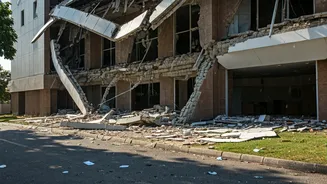







TMC Offices Targeted
In the wake of the recent election results, a wave of post-poll disturbances has reportedly swept through West Bengal. Numerous Trinamool Congress (TMC)
offices across the state have allegedly become targets of attacks. Reports from East Kolkata indicate that a party office belonging to ward councillor Sushanta Kumar Ghosh was ransacked late on Monday night. Supporters of Ghosh have pointed fingers at BJP workers for this incident, claiming that a group armed with rudimentary weapons vandalized the premises, setting furniture and banners ablaze shortly after the election outcome was declared. Similarly, another TMC office, associated with former state minister Arup Biswas in Tollygunge, has also reportedly been vandalized. Incidents of TMC offices being targeted have also been reported from other locations, including Panihati in North 24 Parganas, Ghatal in West Midnapore, and Asansol in West Burdwan, underscoring a pattern of alleged post-election unrest.
Accusations Fly
The escalating post-poll violence has become a point of contention between the state's major political parties, the Trinamool Congress (TMC) and the Bharatiya Janata Party (BJP). TMC leaders have publicly alleged that the BJP is orchestrating these attacks, with accusations that the police are failing to intervene effectively. Conversely, the BJP has vehemently denied any involvement, pushing back with counter-allegations that the TMC is fabricating the violence to tarnish the BJP's reputation. This tit-for-tat exchange highlights the deep-seated political animosity and the struggle for narrative control following the electoral contests. The Election Commission of India (ECI) has taken note of these serious allegations and has formally requested a report from the state government to investigate the reported incidents and ascertain the facts.
Injuries and Retaliation
Amidst the reported clashes and vandalism, there have also been instances of injuries and alleged retaliatory actions. In Mamudpur, located in Naihati, three individuals reportedly sustained injuries following an alleged attack on the house of a BJP worker. TMC-backed miscreants have been blamed for this incident, which also led to the subsequent ransacking of a local club. These events suggest a cycle of retribution, where alleged acts of violence by one party are met with counter-actions by the other. The situation underscores the volatile atmosphere that can prevail in the aftermath of elections, especially when political rivalries are intense. The ECI's involvement and the demand for a state government report are crucial steps in understanding the full extent of this post-poll unrest.
Election Peace Contrasts
This year's election period in West Bengal presented a stark contrast to previous years regarding poll-day violence. The preceding two-phase assembly elections were notably peaceful, with an absence of major untoward incidents. Official figures indicate a remarkable average voter turnout of 92.93% across both phases, marking the highest recorded turnout in the state's history since Independence. A senior IPS official associated with the polls highlighted this significant improvement, stating that West Bengal witnessed an election free from casualties and crude bomb blasts for many years. This is in sharp contrast to previous elections, such as in 2021, which saw at least 24 fatalities due to pre-poll and poll-day clashes, and 2016, which recorded at least seven deaths and over 60 crude bomb blast incidents. The extensive deployment of over 2,400 companies of Central Armed Police Forces (CAPF) likely contributed to this enhanced security and peaceful conduct during the voting process.
EC's Preventive Measures
In an effort to curb the resurgent post-poll violence, the Election Commission of India (ECI) has decided to maintain a significant presence of central forces in West Bengal. Approximately 500 companies of Central Armed Police Forces (CAPF) are to remain deployed in the state until further directives are issued. This decision reflects the ECI's commitment to ensuring law and order and preventing any further escalations of violence in the sensitive post-election period. The deployment of such a large contingent of central forces during the elections themselves, exceeding 2,400 companies, was instrumental in the peaceful conduct of the polling phases. The continued presence of these forces aims to deter any potential troublemakers and provide a sense of security to the populace, thereby preventing a repeat of the post-poll disturbances that have been alleged in the current cycle, and which have historically plagued the state after election outcomes.