




Urban Fortress Under Siege
Kolkata, traditionally seen as Mamata Banerjee's impenetrable urban stronghold and a bastion of Bengali intellectualism, has witnessed a seismic political
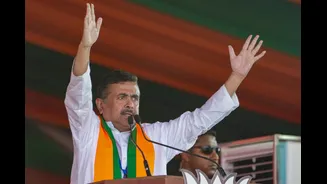
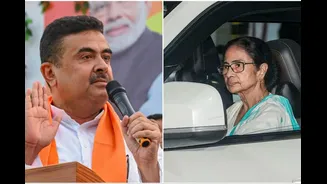
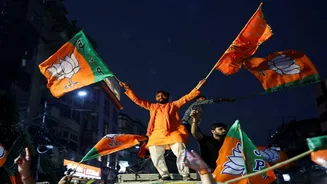
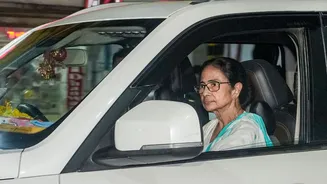
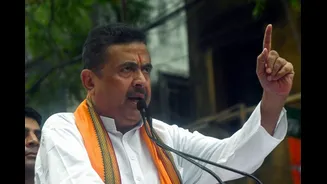
shift. For the first time in many years, the Bharatiya Janata Party (BJP) has successfully breached these high-profile constituencies, signifying a major challenge to the Trinamool Congress's (TMC) established dominance. The BJP managed to secure victory in six out of the eleven Assembly seats within the city limits, signaling a significant disruption of the political status quo. A particularly notable outcome occurred in Bhabanipur, a keenly watched South Kolkata constituency, where Chief Minister Mamata Banerjee suffered a surprising defeat. Her former associate turned formidable rival, Suvendu Adhikari, clinched the seat by a substantial margin of 15,105 votes. This loss in Bhabanipur marked Banerjee's second electoral setback against Adhikari in a major contest, following her previous defeat in the rural constituency of Nandigram during the 2021 elections.
Key Victories Beyond Bhabanipur
The BJP's successful sweep extended beyond the high-stakes battleground of Bhabanipur, with other significant urban seats in Kolkata also falling to the challenger. In the Rashbehari constituency, not far from Bhabanipur, the BJP's candidate Swapan Dasgupta emerged victorious, defeating TMC heavyweight Debasish Kumar by a considerable margin of 20,865 votes. Further evidence of the shifting tide was seen in Tollygunge, an area renowned as the heartland of the Bengali film industry. Here, the BJP's Papia Adhikary secured a win against the TMC's former minister Aroop Biswas, with a margin of 6,013 votes. The disruption was also evident in Shyampukur, another constituency where a TMC minister, Shashi Panja, faced a significant electoral drubbing, losing to BJP's Purnima Chakraborty by 14,633 votes. Moving towards the northern parts of the city, the narrative remained consistent. Kashipur-Belghachia saw the BJP's Ritesh Tiwari unseat the incumbent TMC minister Atin Ghosh, who had previously won comfortably in 2021, by a narrow margin of 1,651 votes, underscoring the competitive nature of these urban contests.
Strategic Cultural Assimilation
The BJP's success in the 'Greater Kolkata' region was not a spontaneous occurrence but rather the result of a meticulously planned strategy designed to dismantle its image as an 'outsider' party. A crucial element of this recalibration involved a concerted effort towards cultural assimilation, carefully integrated with an assertive development agenda. A pivotal moment in this strategy unfolded on Bengali New Year (Poila Baisakh), approximately a week before the initial phase of voting. Recognizing that Mamata Banerjee had frequently labeled the BJP as 'bohiragato' (outsiders), the party actively participated in Bengali cultural festivities. BJP leaders were observed engaging with traditions such as playing the 'dhaak' (traditional drum), carrying fish (a staple Bengali food), and enthusiastically joining in Poila Baisakh celebrations. To further embed this Bengali imagery, the party strategically adopted 'fish and rice,' the quintessential Bengali meal, as a symbol. This move aimed to position the BJP as a party deeply aligned with the cultural identity of the 'bhadralok' (educated Bengali gentry) and directly challenge the TMC's narrative centered on Bengal's regional pride ('ashmita').
Messaging and Development Focus
Complementing the cultural outreach was the BJP's potent political messaging, which played a significant role in its urban campaign. Union Home Minister Amit Shah consistently reinforced the party's commitment to appointing a 'bhumiputra' (son of the soil) as the Chief Minister should the BJP come to power. This narrative directly countered Banerjee's central theme that the BJP was a party composed of 'outsiders' from Delhi or Gujarat. Shah explicitly stated, "If the BJP is voted to power, the next chief minister of West Bengal will not be someone from outside. It will be a bhumiputra, a son of this soil, who will lead the state towards Sonar Bangla." Simultaneously, the BJP focused on projecting a vision of a 'New Bengal,' directly addressing the urban electorate's pressing concerns. Their campaign rhetoric emphasized crucial issues such as increased investment, enhanced job opportunities, and economic revitalization, aiming to present Kolkata not just as a city rich in heritage but as a potential global hub for industry and economic growth.