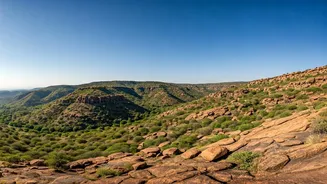










Aravalli: The Backdrop
The Aravalli Range, an ancient mountain system in India, holds immense environmental significance. It stretches across several states, including Rajasthan,
Haryana, and Delhi, and plays a vital role in regulating the climate of North India. The government's stance comes amid concerns over mining activities and their potential impact on the environment. The issue involves differing interpretations of the Supreme Court's definition regarding the area's protected status. The debate surrounding the Aravallis is complex, involving environmental protection, economic interests, and the legal framework governing land use. The government's position highlights the delicate balance between sustainable development and environmental conservation within this ecologically sensitive zone.
Govt's Stance Explained
The government asserts that fears related to the Supreme Court's definition are misplaced. This suggests that the current legal and regulatory framework adequately addresses environmental concerns related to mining in the Aravalli Range. The government likely believes that existing regulations and monitoring mechanisms are sufficient to mitigate any potential negative impacts of mining activities. The authorities are possibly emphasizing that their policies prioritize environmental protection while allowing for responsible resource utilization. They may also point to specific measures implemented to ensure that mining operations adhere to environmental standards, thus minimizing harm to the Aravalli's ecosystem. The government seems confident that it has addressed the concerns surrounding the impact of mining activities in the region.
Ecological Significance
The Aravalli Range significantly influences the climate in North India. It acts as a barrier, impacting monsoon patterns and helping to control desertification. The range is crucial in intercepting moisture-laden winds, which bring rainfall to the region. The presence of the Aravalli helps in maintaining groundwater levels. The hills also play a vital role in preventing the spread of the Thar Desert, a significant environmental benefit. They are home to diverse flora and fauna, making them an essential biodiversity hotspot. Protecting the Aravalli is thus vital for sustaining the ecological balance of North India and safeguarding the region's water resources and overall environmental health. The significance of the Aravalli Range highlights the need for careful management to protect it from activities that could harm its natural attributes.
Balancing Interests
The central government aims to balance environmental conservation with the economic aspects of resource use. The challenge lies in harmonizing the interests of various stakeholders, including environmental groups, local communities, and the mining industry. This requires a comprehensive approach involving effective regulations, monitoring, and stakeholder engagement. The goal is to develop and implement sustainable mining practices that minimize environmental harm while supporting economic development. The government's policies emphasize the need to find a sustainable approach to managing the Aravalli Range, ensuring that both the environment and the economy benefit. Striking this balance is crucial for the long-term sustainability of the region.