






Voyage of Discovery
The story of the bougainvillea, a plant cherished in India for its vivid colours and resilience, is deeply intertwined with the spirit of 18th-century
global exploration. It wasn't merely discovered; it was charted during extensive voyages that connected continents. French botanist Philibert Commerçon first formally documented this remarkable specimen in the vibrant landscapes of Brazil. This occurred during a significant circumnavigation expedition helmed by the renowned explorer Louis Antoine de Bougainville. The plant, now a common sight in tropical and subtropical climates worldwide, began its journey to international fame from its native South American soil, marking the start of its fascinating global odyssey.
Explorer's Honour
While Philibert Commerçon was the botanist who meticulously catalogued the bougainvillea, the plant itself bears the name of the expedition's leader, Louis Antoine de Bougainville. This naming convention highlights a historical era where the grandeur of exploration often overshadowed individual scientific contributions. The decision to honour the explorer rather than the discoverer underscores the intertwined nature of scientific endeavour and grand voyages of discovery during the 18th century. It's a subtle reminder of how powerful figures and their ambitious journeys shaped the recognition and dissemination of new botanical finds across the globe.
Global Dissemination
Originating from the diverse ecosystems of South America, particularly regions like Brazil, Peru, and Argentina, the bougainvillea's journey to becoming a global garden favourite was facilitated by burgeoning colonial trade routes and dedicated botanical exchanges. By the early 19th century, the plant had made its way to Europe, captivating horticulturalists with its striking appearance. From Europe, it was strategically introduced to colonies across the world through established botanical gardens and expanding trade networks. India, with its suitable climate and burgeoning interest in ornamental horticulture, became a significant destination, embracing the bougainvillea as a quintessential part of its landscape.
The True Nature
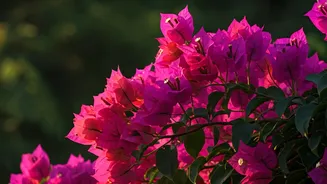
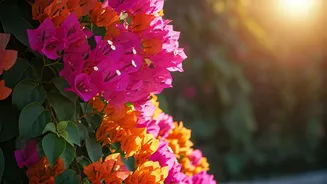
A fascinating secret lies within the bougainvillea's captivating display: what we perceive as its vibrant "flowers" are, in fact, not true blossoms at all. These brightly coloured structures are technically known as bracts, which are modified leaves that serve to attract pollinators. The plant's actual flowers are quite small and inconspicuous, typically white or greenish, and nestled discreetly within the centre of these colourful bracts. This botanical peculiarity is one of the plant's most surprising and intriguing characteristics, adding another layer of wonder to its already admired beauty.
Garden Staple Status
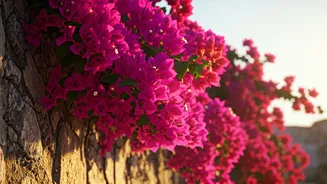
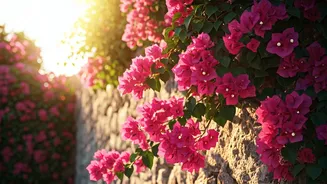
The bougainvillea's widespread adoption as a beloved garden plant, especially in places like India, is a testament to its remarkable adaptability and aesthetic appeal. Its exceptional drought resistance makes it a hardy choice for varied climates, requiring minimal watering once established. Coupled with its profusion of vivid colours – ranging from intense fuchsias and fiery oranges to soft pinks and brilliant whites – it offers unparalleled visual impact. These qualities have cemented its status as a premier choice for landscaping in tropical and subtropical regions, transforming ordinary gardens into vibrant, eye-catching displays of nature's artistry.