





Faster Than Ever
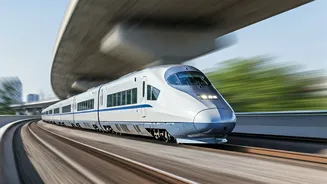
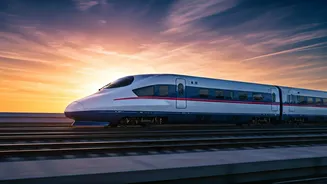
Get ready for a significant leap in inter-city travel as the proposed Delhi-Varanasi bullet train corridor promises to dramatically slash journey times.
According to Railway Minister Ashwini Vaishnaw, the ambitious project aims to connect Delhi and Varanasi, cutting down the travel duration to a mere 3 hours and 50 minutes. This high-speed rail initiative, which was highlighted in the Union Budget 2026-27, is poised to revolutionize connectivity between these vital urban centers. Currently, the fastest rail options on the Delhi-Lucknow route, such as the Vande Bharat Express and Shatabdi Express, take approximately 6 hours and 25 minutes to 6 hours and 50 minutes. The new bullet train is set to reduce this to an astonishingly quick 2 hours, making daily commutes or business trips between these cities a far more feasible prospect. This substantial reduction in travel time is expected to foster greater economic integration and streamline movement for millions of people.
Economic Hub Creation
The high-speed rail corridor extending from Varanasi to Lucknow and connecting to Delhi is envisioned as a powerful catalyst for regional economic development. Minister Vaishnaw emphasized that this infrastructure project will effectively merge the Varanasi-Patna and Varanasi-Lucknow regions into a unified economic zone. By facilitating seamless and rapid transit, the bullet train network is expected to boost commerce, tourism, and investment across these areas. The enhanced connectivity will allow for easier movement of goods and people, fostering business growth and creating new opportunities. This strategic development aims to unlock the economic potential of eastern India, making these regions more competitive and attractive for businesses and residents alike. The improved accessibility is a key factor in creating a more integrated and prosperous national economy.
Bullet Trains vs. Flights
The advent of bullet trains is predicted to significantly challenge the dominance of air travel on numerous upcoming corridors. Minister Vaishnaw expressed confidence that in many new high-speed rail routes, the drastically reduced travel times will make trains the preferred mode of transportation over flights. For instance, the Mumbai to Pune route is projected to see travel times shrink to just 28 minutes. Similarly, the Pune to Hyderabad journey is estimated to take one hour and 55 minutes, and Hyderabad to Bengaluru around 2 hours. This efficiency means that for many inter-city routes, travelers will bypass airports altogether, opting for the speed and convenience of the train. Vaishnaw directly advised potential investors in the airline industry to take note, suggesting that these high-speed rail sectors will be "99 per cent dominated by railways," signaling a major shift in passenger preferences.
Project Implementation
The Ministry of Railways is actively pushing forward with the development of seven new high-speed rail corridors, with Detailed Project Reports (DPRs) already prepared for these ambitious ventures. Responsibility for the swift execution of these projects has been officially assigned to the National High-Speed Rail Corporation Limited (NHSRCL) since February. The Railway Board has issued directives to NHSRCL to review and update the existing DPRs, ensuring they are current and comprehensive. Furthermore, a parliamentary panel, in its report on Demands for Grants 2026-27, has strongly advised the Ministry to prioritize land acquisition and secure all necessary statutory clearances *before* sanctioning new projects. This recommendation aims to guarantee timely project implementation and ensure financial viability, preventing potential delays and cost overruns that can plague large infrastructure developments.