



The Freebie Frenzy
In the run-up to elections in Tamil Nadu, the political landscape is dominated by promises of freebies, with both the Dravida Munnetra Kazhagam (DMK) and the All
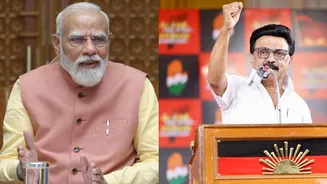
India Anna Dravida Munnetra Kazhagam (AIADMK) vying to outdo each other in their manifestos. The DMK has pledged free electricity up to 100 units for all households, complimentary bus travel for women, and a monthly financial aid of ₹1,000 for women heads of families. In response, the AIADMK has proposed providing free laptops to all students, free two-wheelers for women, and a monthly allowance of ₹1,500 for unemployed youth. These extensive offerings are not merely campaign rhetoric but have become a central theme, shaping voter expectations and the overall election discourse. The Bharatiya Janata Party and the Congress party have also entered the fray with their own sets of populist promises, including free laptops and financial assistance for women, intensifying the competition. This strategy, while popular, has sparked significant debate regarding its long-term financial sustainability and its potential to skew the electoral playing field, drawing the attention of the Election Commission of India.
A Legacy of Welfare
Tamil Nadu has a long-standing tradition of welfare politics, with both the DMK and AIADMK pioneering extensive social programs over several decades. This culture of giving dates back to the mid-20th century, with early initiatives focusing on subsidized rice and educational access. Over time, these schemes evolved to include tangible goods and direct financial assistance. For instance, households have historically received items ranging from color television sets to kitchen appliances. A resident like Thamizharasi exemplifies the direct benefits, receiving a monthly cash handout of ₹1,000 for 23 months under the Kalaignar Magalir Urimai Thogai scheme and utilizing the Vidiyal Payanam scheme for free bus travel for work and family visits. Furthermore, she resides in a home built under the Kalaignar Kanavu Illam Scheme. These programs, initiated by the DMK after the 2021 assembly elections, have eased financial burdens for many. The state's pioneering role in welfare politics is further highlighted by historical examples, such as MGR's expansion of the mid-day meal scheme to encourage school enrollment and improve nutrition, and his introduction of free electricity for farmers. Karunanidhi, Stalin's father, later extended free electricity to all the poor and distributed free color televisions. Jayalalithaa, on the other hand, branded welfare schemes with the 'Amma' name, offering subsidized food, water, LPG cylinders, and household appliances, solidifying Tamil Nadu's reputation as a pioneer in freebie politics.
Financial Strain Debated
While the welfare schemes in Tamil Nadu have demonstrably improved the living conditions for many and are credited with contributing to a significant reduction in poverty, their financial implications are a growing concern. The state's expenditure on social welfare programs is substantial, with nearly ₹98,857 crore allocated for such schemes in the 2025-26 budget alone. The Kalaignar Magalir Urimai Thittam scheme alone accounts for ₹13,807 crore of this. This massive spending has coincided with a sharp increase in the state's debt, which rose from approximately ₹5,60,000 lakh crore in 2021-22 to an estimated ₹9,52,374 lakh crore for 2025-26, projected to reach ₹10,62,248 lakh crore by 2026-27. As a percentage of the state's Gross State Domestic Product (GSDP), this debt stands at about 26.43%. Political analysts and financial experts caution that funding these giveaways through borrowing could potentially cripple state finances, emphasizing that ultimately, the exchequer must be repaid. Despite these concerns, studies suggest that Tamil Nadu's debt-to-GSDP ratio remains more favorable compared to several other Indian states, including Madhya Pradesh, Uttar Pradesh, Maharashtra, West Bengal, and Punjab. The debate continues on whether these schemes, while reducing inequality and improving livelihoods, are financially sustainable in the long run, especially when funded through public debt.
National Impact and Outcomes
The trend of offering welfare schemes and cash handouts is not unique to Tamil Nadu; it has been embraced by various political parties across India, including the current Union government. Central government initiatives such as the PM-Kisan Samman Nidhi, providing ₹6,000 annually to farmers, and the Pradhan Mantri Awas Yojana, offering financial aid for home construction, are examples of welfarism at the national level. These schemes, alongside state-level programs, have shown tangible results in poverty reduction. For instance, multi-dimensional poverty in Tamil Nadu has seen a significant decrease, falling from 4.76% of the population in 2015-16 to 1.43% in 2023. This reduction is more pronounced than the national average, which declined from 24.85% to 11.28% during the same period. Other states like Maharashtra, Karnataka, Uttar Pradesh, West Bengal, and Madhya Pradesh have also experienced notable drops in poverty rates. These statistics, derived from National Family Health Surveys, underscore the widespread impact of welfare measures. While the effectiveness of these schemes in achieving their objectives, such as reducing income inequality, is still debated, their role in lifting a considerable portion of the population out of poverty is evident, making them a crucial element in India's political and socio-economic landscape.