






Tech's Road Safety Role
The Indian government's plan to implement vehicle-to-vehicle (V2V) technology underscores a proactive approach to road safety. The primary goal of V2V technology is
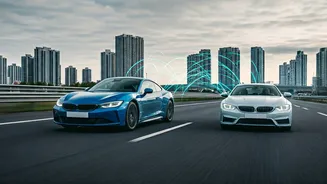
to create a network where vehicles can seamlessly share data. This includes information about speed, direction, location, and potential hazards like sudden braking or obstacles on the road. This real-time data exchange enables vehicles to anticipate dangerous situations and respond accordingly. The core of the system is the deployment of dedicated short-range communication (DSRC) devices within vehicles. These devices allow cars to communicate with each other within a certain range, exchanging critical safety information. This level of connectivity allows for a more comprehensive and responsive road safety system, going beyond the limitations of traditional safety measures.
How V2V Works
Vehicle-to-vehicle technology relies on a system of constant communication among vehicles. Each equipped vehicle transmits and receives data packets, containing information such as its current speed, position, and direction. This data is processed by the vehicle's onboard computer, which analyzes the information to identify potential hazards. The DSRC devices, acting as the primary communication tools, broadcast this data to nearby vehicles within range. The range is typically hundreds of meters, allowing for quick response times. When the system detects a potential danger, such as an impending collision or a vehicle ahead suddenly braking, it alerts the driver through visual or audio warnings. This early warning system provides drivers with crucial seconds to react and avoid accidents. Furthermore, V2V can automatically take actions like adjusting speed or providing automated braking support in critical situations, increasing the effectiveness of preventive safety measures.
Benefits and Goals
The introduction of vehicle-to-vehicle technology in India is expected to bring about a paradigm shift in road safety. One of the main benefits is the potential to reduce the number of accidents. By enabling vehicles to communicate and respond to hazards, V2V technology can help prevent collisions and reduce the severity of accidents. In addition to collision avoidance, the technology has the potential to improve traffic flow. Real-time data sharing can help drivers make informed decisions, reducing congestion and improving overall efficiency on the roads. The government aims to see a significant decrease in road fatalities and injuries. The successful implementation of V2V hinges on factors like widespread adoption, effective infrastructure support, and clear regulatory guidelines. The government hopes this technology will be an important step towards realizing Vision Zero, a goal of zero road fatalities.
Overcoming Challenges
While vehicle-to-vehicle technology presents significant benefits, its implementation faces certain hurdles. A major challenge is the initial cost and the need for widespread adoption. For V2V to be truly effective, a substantial number of vehicles on the road must be equipped with the necessary technology. This requires investment from both vehicle manufacturers and consumers. Infrastructure compatibility is also crucial. The technology relies on a robust network of communication infrastructure, including roadside units and reliable connectivity. Cyber security is another important consideration. V2V systems exchange sensitive data, making them vulnerable to cyberattacks. Ensuring the security and privacy of this data is vital. The government and automotive industry must collaborate to address these challenges. Regulations will have to ensure that all parties follow established standards. This includes setting industry standards and providing incentives to encourage greater adoption of the technology.
Future Implications
The long-term effects of implementing vehicle-to-vehicle technology are far-reaching. As V2V becomes more common, it paves the way for advanced driver-assistance systems (ADAS) and autonomous driving. By combining data from V2V with other technologies like sensors and artificial intelligence, vehicles can make more informed decisions and become more self-sufficient. This evolution can lead to more efficient transportation systems. V2V's ability to provide real-time data will improve traffic management and reduce congestion. The data collected from V2V systems can also be used for urban planning. Planners can use this data to identify traffic bottlenecks, optimize road layouts, and develop more efficient transportation networks. The government's decision to embrace V2V technology indicates a significant step toward safer, smarter, and more sustainable mobility in India.