






Bengal's Mango Elixir
Imagine the intense heat of an Indian summer, and then picture a tall, frosty glass of 'aam pora shorbot'. This quintessential Bengali delight begins with
a green mango, charred over an open flame until its skin blisters and softens. The smoky pulp is then carefully extracted, blended with a hint of ginger, salt, and sugar, and simmered with water to create a thick, concentrated syrup. When thirst strikes, this potent base is mixed with cold water, offering a revitalizing escape from the sweltering temperatures. It's more than just a drink; it's a taste of summer perfected, a testament to the ingenuity of using readily available ingredients to create something truly magical and cooling.
The Essence of Sharbat
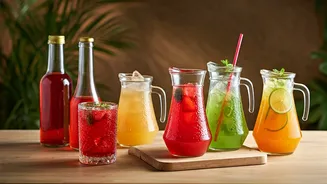
While many might equate 'sharbat' with simple juice, it's a distinct beverage that always features added flavors, elevating it beyond plain fruit extract. The term 'sharbat' itself originates from the Arabic word 'sharb,' meaning a light beverage, and has Persian roots. Before the arrival of new influences, India's natural sweet drink was sugarcane juice, often enhanced with ginger. However, the concept of flavored drinks wasn't entirely new. Ancient India was already familiar with 'panaka,' a precursor to modern sharbats, particularly savored in the southern regions where variations using tamarind and gooseberry are still enjoyed today. These ancient concoctions were more than just refreshments; they often served medicinal purposes.
Ancient Medicinal Roots
The history of sharbats in India stretches back millennia, with references found in ancient Vedic literature and the Arthashastra, mentioning drinks prepared with molasses. Food historian Salma Yusuf Husain highlights that by 200 BC, these beverages were skillfully prepared by hakims (traditional physicians) as medicinal drinks. These ancient formulations were designed to aid digestion and soothe the nervous system. For instance, a blackberry and mulberry sharbat was prescribed to alleviate coughs, while a pear sharbat was believed to improve liver function. Even sugarcane juice, when combined with specific spices, was utilized to treat ailments like biliousness, underscoring the integral role of these flavored drinks in ancient Indian wellness practices.
Persian Influence and New Flavors
The arrival of Muslims in India during the second millennium AD ushered in a new era for sharbat making, introducing a wider array of sweet varieties. These new sharbats were often brilliantly colored and infused with fragrant essences like rose and kevda (screwpine), and even incorporated herbs. A notable drink from this period was 'fuqqa,' made from barley, which was commonly served during the Delhi Sultanate. It is even theorized that the popular, though perhaps divisive, drink Rooh Afza was inspired by a rose-infused sharbat created for Mughal Empress Nur Jahan. The story goes that she recalled the rose-scented sharbats her mother made in Iran, prompting her hakim to capture that essence in a bottled drink.
Regional Varieties and Unique Blends
The true charm of sharbats lies in their incredible diversity, offering an endless spectrum of flavors and regional specialties. In the northern state of Uttarakhand, 'buransh sharbat,' crafted from rhododendron flowers, is a beloved drink, purported to offer digestive benefits. On a more unusual note, 'bela sharbat' is made from delicate jasmine flowers, available for a fleeting couple of months during the summer, creating a rare and fragrant treat. Of course, the universally adored mango sharbat, whether from green or ripe mangoes, remains a perennial favorite. This versatile drink, embodying the spirit of Indian summer, is arguably one of the country's most delightful culinary creations, providing a cool respite with every sip.