





Passenger Sparks Food Scare
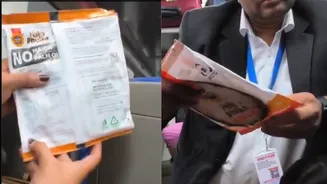
A recent incident aboard the Vande Bharat Express has brought the safety of onboard catering under scrutiny. A passenger, Avani Bansal, shared a video
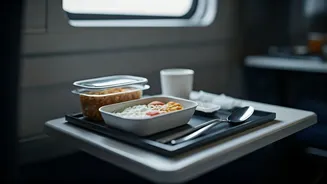
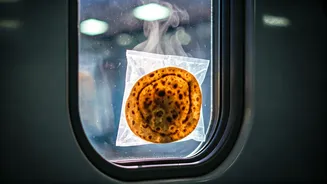
on social media platform X that captured her questioning a train staff member. The footage highlighted a practice where food items, specifically rotis and kachoris, were served piping hot while still sealed within plastic packaging. Bansal recounted her experience, noting that on both a Vande Bharat journey from Prayagraj to Delhi and a previous Rajdhani train trip, she received food items that were noticeably warm inside their original sealed packs. She expressed particular concern that the packaging for the rotis, labeled only for storage in cool, dry conditions, lacked any explicit instructions for microwave or in-pack heating, yet the packets were handed over warm. This led her to question the potential health implications of heating food in such packaging, raising the possibility of chemical migration from the plastic into the food, especially when done at scale.
IRCTC's Official Clarification
In response to the circulating video and passenger concerns, the Indian Railway Catering and Tourism Corporation (IRCTC) issued a statement to address the food safety issue. IRCTC clarified that the food served on Vande Bharat trains is prepared in designated base kitchens and then packaged using materials that are both biodegradable and microwave-safe. The corporation emphasized that the packaging substances utilized have received approval from the Food Safety and Standards Authority of India (FSSAI) and are designed to preserve the quality and hygiene of the food throughout its journey to the passenger. Regarding the heating process, IRCTC assured that the containers are specifically engineered for microwave heating without negatively impacting the food's safety or flavor. They reiterated their commitment to upholding stringent quality control measures and adhering to all food safety regulations for all meals provided on Vande Bharat services.
Understanding Packaging Standards
The debate surrounding the Vande Bharat Express food service also involved discussions about the plastic packaging itself. Some passengers and online commentators pointed to a recycling symbol on the packaging, a triangle containing the number 7, and sought clarification on its meaning. An AI tool explained that the Resin Identification Code '7' signifies 'Other' plastics, which can include materials like polycarbonate or bioplastics. While this code is primarily for recycling identification, it does not automatically guarantee food safety or microwave suitability. Experts often advise caution with #7 plastics, as certain variants might contain chemicals like BPA, which could potentially leach into food when heated. The advice given was to always check for explicit 'microwave safe' labels or FDA approval on the packaging, and in cases of doubt, to consult the manufacturer's specifications rather than relying solely on general food-grade status. This highlighted the critical difference between 'food-grade' and 'microwave-safe' certifications for food packaging.
Commitment to Passenger Experience
The IRCTC concluded its response by underscoring its dedication to offering passengers a comfortable and hygienic dining experience. The corporation stated its continuous efforts to enhance its services and actively address any feedback or concerns voiced by passengers. The aim of this communication was to provide reassurance to travelers regarding the safety and quality of the food provided on the Vande Bharat Express. The incident and subsequent response highlight the importance of clear communication and robust food safety protocols in the railway catering sector, ensuring passenger trust and well-being.