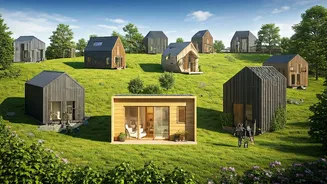

Introduction: Tiny Living
The trend of tiny living has taken off as a movement advocating for a simpler, more sustainable lifestyle. It is a reaction to the prevailing culture of consumerism
and a desire for financial freedom. Tiny houses are generally characterized by their small size, typically under 600 square feet, which promotes minimalism. This design philosophy encourages the occupants to prioritize their needs and to reduce their belongings. Tiny homes often come with a lower ecological footprint, with many owners focused on environmentally friendly design practices, like using renewable energy and building with reclaimed materials. The movement is popular across all age groups and income brackets, showcasing that it offers options for various people seeking to reduce expenses, minimize their environmental impact, or gain more mobility.
Japan's Compact Designs
Japan, with its high population density and limited space, has long been a pioneer in compact housing. Many of the smallest houses in Japan are ingeniously designed to maximize every square inch. These homes often feature multi-functional furniture, built-in storage solutions, and efficient layouts. One might find homes with integrated lofts, sliding doors, and adaptable spaces. The emphasis is on utilizing vertical space, with high ceilings and mezzanine levels to create an illusion of spaciousness. Another common design aspect includes natural light, implemented through large windows to compensate for the confined area. Japanese micro-homes often embody a minimalist aesthetic, with clean lines, neutral colors, and a focus on functionality. These houses demonstrate that a comfortable, practical living space is possible even in highly restricted environments.
The Minimalist Movement
The minimalist movement greatly influences the design and lifestyle of individuals living in small homes. The movement encourages people to declutter their belongings and embrace simplicity. The concept extends beyond material possessions, advocating for a lifestyle that reduces stress, increases mindfulness, and promotes a greater appreciation for experiences over things. In tiny homes, minimalism is essential due to limited space. Residents must carefully consider every item they own, making conscious decisions about what is truly essential. This process fosters a sense of freedom and enables them to focus on what matters most. The minimalist aesthetic, which includes clean lines, simple decor, and a lack of unnecessary clutter, is well-suited to the tiny living environment, creating a sense of calm and order. Ultimately, the minimalist philosophy aligns with the goals of tiny living by fostering a sustainable, intentional, and fulfilling way of life.
Efficient Space Utilization
Effective space utilization is paramount in tiny houses. Innovative design features are often implemented to make the most of limited square footage. For example, vertical storage solutions such as built-in shelving, lofted beds, and high cabinets are popular. Multi-functional furniture, like sofa beds, folding tables, and transformable desks, is commonly employed to serve multiple purposes. Clever storage solutions, like drawers under beds, hidden compartments, and built-in wardrobes, are essential for keeping clutter at bay. Another factor involves the use of open floor plans. This allows the space to feel larger and enables flexibility in how the home is used. Mirrors are sometimes used to create the illusion of additional space. By employing these techniques, tiny house dwellers demonstrate that creativity and resourcefulness are more important than size.
International Tiny Homes
Tiny homes can be found all over the world, demonstrating that the trend appeals to diverse cultures and environments. In various countries, people are embracing the micro-living lifestyle. For example, in the United States, tiny houses are becoming popular in urban areas where housing costs are high, and in rural areas where individuals seek a simpler lifestyle. European nations, such as the Netherlands and Germany, have seen the rise of innovative tiny house communities that prioritize sustainability and community living. In Australia, the focus often lies on designing compact homes that can withstand extreme weather conditions, as well as integrating outdoor living spaces. In these places, small houses show adaptability to local needs and regional customs, highlighting the global appeal of micro-living.
Eco-Friendly Construction
A large number of tiny house enthusiasts prioritize eco-friendly construction methods and sustainable living practices. Building materials that are used are often renewable, recycled, and locally sourced. Construction often involves techniques like using reclaimed wood, installing solar panels, and utilizing rainwater harvesting systems. Energy efficiency is also a key concern, with many tiny houses designed to minimize energy consumption by using insulated walls, high-efficiency appliances, and energy-efficient lighting. Many tiny home dwellers aim to reduce their carbon footprint and live a more sustainable lifestyle. The focus on sustainability makes tiny homes an attractive choice for those concerned about the environment and looking to reduce their impact on the planet. These practices align with the broader aims of the tiny house movement, which is to promote a responsible, eco-conscious way of life.
Design Innovations
Tiny house designs are continuously evolving, with architects and builders exploring novel and inventive solutions for small-space living. Some innovations include the integration of smart home technology. These systems allow homeowners to control lighting, temperature, and security systems remotely. Another focus is on modular design. These modular components are constructed off-site and assembled quickly and efficiently. Such designs offer a lot of flexibility and can be adapted to various needs and environments. Tiny houses are sometimes built on wheels to make them mobile. This creates the freedom to move the home to different locations or adjust to changing circumstances. Design innovations within tiny homes demonstrate a commitment to both functionality and sustainability, showing that small spaces can be well-equipped with the latest technologies and design concepts.
Financial Benefits
One of the major draws of tiny house living is the potential for financial benefits. The smaller size of tiny homes usually results in a significantly lower purchase price or construction cost, in comparison to traditional housing. This reduces the need for large mortgages and allows for quicker debt repayment. Tiny house owners often experience lower utility bills because of the reduced square footage, as well as energy-efficient designs. This results in savings on heating, cooling, and electricity. Moreover, homeowners often find it easier to save money and accumulate wealth, due to the reduced expenses. Some tiny home residents choose to live mortgage-free, which provides an added sense of security. All these factors together, make tiny homes an appealing option for individuals looking to gain financial freedom and achieve their financial goals.
Challenges & Considerations
While tiny living offers many advantages, it also comes with various challenges and considerations. One key challenge is the need to adjust to a significant reduction in space. This requires individuals to declutter their belongings and embrace a minimalist lifestyle. Zoning regulations can sometimes pose obstacles. Some areas have restrictions on the minimum size of a dwelling, which can make it difficult to build or park a tiny house. Finding suitable locations to live is sometimes difficult, particularly in urban areas. Tiny house owners may also need to consider the challenges of downsizing possessions and letting go of the habits associated with a larger home. Careful planning, preparation, and an open mind are essential for anyone considering the move to a tiny home to ensure a smooth transition and a satisfying living experience.
Conclusion: Future of Tiny
Tiny living is expected to continue growing in popularity as more individuals and families embrace its advantages. As housing costs increase and environmental awareness grows, tiny houses will likely continue to be an attractive option for many. Future trends might include even greater integration of smart home technologies, more emphasis on sustainable materials and construction practices, and the development of tiny house communities. The increasing collaboration among architects, builders, and policymakers will lead to more innovative and accessible tiny home solutions. The future of tiny living is bright. It promises a continuation of creativity, community, and the ongoing shift toward sustainable, affordable, and intentional living.