








Gatherings Banned Near Strongrooms
In a swift move to maintain order and security, Kolkata police have implemented a ban on all public gatherings across seven strategic areas where electronic
voting machines (EVMs) from the recent Assembly elections are being stored. This decisive action comes in the wake of significant agitation from the Trinamool Congress, who voiced concerns regarding alleged suspicious activities around the strongrooms. The areas under this prohibitory order include Sahid Kshudiram Bose Road, Judge's Court Road, Jadavpur, Diamond Harbour Road, Lord Sinha Hall, Naresh Mitra Sarani (also known as Beltala Road), and Pramathesh Barua Sarani. The enforcement of these restrictions aims to prevent any potential disruption and ensure the integrity of the electoral process during this sensitive post-polling period.
Trinamool's Allegations Addressed
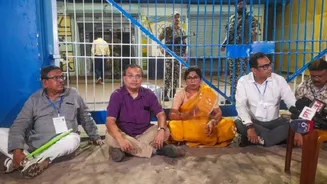
The heightened security measures followed a night of considerable tension, marked by a confrontation between supporters of the Trinamool Congress and the Bharatiya Janata Party outside a counting centre at Kolkata's Netaji Indoor Stadium. Trinamool leaders, including candidates Kunal Ghosh and Shashi Panja, actively protested outside the venue, citing suspicions about the handling of the EVMs. This public display of dissent prompted Chief Minister Mamata Banerjee to personally visit a strongroom at the Shakhawat Memorial counting centre. The allegations, however, were promptly dismissed by the West Bengal Chief Electoral Officer, Manoj Kumar Agarwal, who sought to clarify the procedures and alleviate concerns.
CEO Clarifies Polling Procedures
West Bengal Chief Electoral Officer Manoj Kumar Agarwal provided a detailed explanation to dispel the Trinamool Congress's apprehensions. He confirmed that the strongrooms at Khudiram Anushilan Kendra house EVMs from seven north Kolkata Assembly constituencies, which were securely sealed in the presence of candidates, election agents, and observers after polling concluded. The process of sorting postal ballots, stored separately at the same centre, was ongoing. Agarwal emphasized that political parties were informed via email about these procedures. He further clarified that the segregation of postal ballots was being conducted in corridors using torchlight due to the prohibition of electricity within the strongrooms, a practice that was misconstrued as suspicious activity by the ruling party.