







India's Passport Ascent
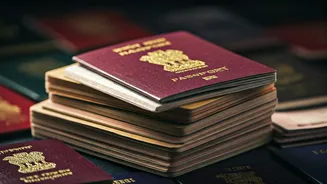
India has demonstrated a promising upward trajectory in the Henley Passport Index for 2026, improving its position by five places. This advancement signifies
a strengthening of its passport's influence on the global stage, indicating expanded travel freedoms for Indian citizens. The Indian passport now enables visa-free or visa-on-arrival access to 55 destinations worldwide, which marks a recovery to its 2024 position, after dropping to 85th in 2025. India shares the 80th spot with Niger and Algeria, demonstrating that there is still room for further expansion in terms of travel mobility. This growth reflects the ongoing diplomatic efforts and international relations that shape a country's passport power.
Singapore's Leading Status
For the third consecutive year, Singapore has maintained its position as the leading country in the Henley Passport Index. The Singaporean passport continues to be the most powerful, granting visa-free access to a remarkable 192 destinations across the globe. This level of access grants Singaporean citizens unparalleled ease of travel, allowing seamless transitions across different continents. Singapore's sustained dominance underscores the significance of strong international relationships and strategic diplomacy in expanding passport power. This has allowed the nation to continuously improve the travel opportunities available to its citizens year after year.
Japan & South Korea
In the 2026 rankings, Japan and South Korea share the second position, with their passports offering access to 188 destinations. Both nations benefit from robust diplomatic ties and significant economic influence, allowing their citizens to enjoy substantial travel advantages. These countries show how diplomatic and economic strength contribute directly to passport power. Citizens of Japan and South Korea experience similar levels of travel freedom, allowing them to traverse the world with relative ease and access a vast number of countries without the need for prior visa arrangements, reflecting their countries' significant global presence.
European Union's Strength
The European Union demonstrates its collective strength in global mobility with several countries consistently appearing near the top of the rankings. Multiple European nations, including Austria, Belgium, Finland, France, Germany, Greece, Ireland, Italy, Netherlands, and Norway, collectively occupy the fourth rank. Their passports provide access to 185 destinations, showcasing the benefits of decades of established international agreements and cooperation. These nations benefit from open borders and reciprocal agreements, providing their citizens with extensive travel options and reinforcing Europe's role in global mobility.
UAE's Rising Influence
The United Arab Emirates (UAE) has shown a remarkable upward trend in the Henley Passport Index. The UAE, alongside Hungary, Portugal, Slovakia, and Slovenia, has secured the fifth position, with passport access to 184 destinations. The UAE's progress is attributed to strategic diplomatic initiatives and effective international partnerships, which have accelerated its passport's power. This reflects how proactive diplomacy can have a significant impact, making the UAE a case study in how targeted efforts can enhance global mobility for its citizens within a short time frame.
Other Notable Countries
Several other countries have earned their spots in the top rankings. Denmark, Luxembourg, Spain, Sweden, and Switzerland jointly hold the third position, offering access to 186 destinations. Australia, Latvia, Liechtenstein, and the UK share the seventh rank, providing access to 182 destinations. Lithuania secures the ninth place with access to 180 destinations. The United States rounds out the top 10, providing access to 179 destinations, having improved from past years. These positions underscore the diverse factors that influence passport power, from geopolitical stability to economic influence and diplomatic relations.
Canada's Ranking
Canada holds the eighth position, providing its citizens access to 181 destinations. Canada's strong standing reflects its presence in North America, allowing citizens to enjoy extensive travel freedom in Europe, Asia, and other regions. This highlights the benefits of strong international relations and the impact these have on the global mobility of its citizens. Canada's performance highlights the value of maintaining positive relationships with other countries, leading to better opportunities for travel and fostering global collaboration.
UK's Passport Recovery
The UK's performance in the Henley Passport Index highlights a significant recovery, moving up in the rankings after a period of decline. The UK, alongside Australia, Latvia, and Liechtenstein, shares the seventh position, giving its citizens access to 182 destinations. The recovery signifies the UK's strengthened position on the international stage and its efforts to rebuild global ties. This progress indicates that through strategic efforts and international agreements, countries can reverse negative trends and improve the travel prospects for their citizens.
Global Mobility Trends
The Henley Passport Index 2026 offers important insights into global mobility trends. The report underscores the dynamic nature of passport power, influenced by diplomatic relations, economic strength, and geopolitical shifts. The data demonstrates how countries are continuously striving to expand travel freedoms for their citizens. As the world becomes increasingly interconnected, the value of a strong passport, which offers visa-free access to numerous destinations, becomes more critical. The index serves as a valuable resource for individuals and policymakers, highlighting the ongoing developments in the world of travel and international relations.
The US in Top 10
The United States is back in the top 10, holding its place in the elite group, which highlights its ongoing global influence. After sliding in prior years, the US passport now grants access to 179 destinations. This return to the top reflects the country's efforts to strengthen diplomatic ties and promote travel opportunities for its citizens, marking a significant achievement in its quest to maintain its global leadership. This signifies the importance of strong international connections and proactive strategies in shaping a nation’s travel power.