




The Unseen Obstruction
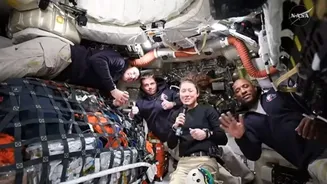
During the groundbreaking Artemis II lunar flyby, the four-member crew aboard the Orion spacecraft encountered an anticipated 40-minute period where communication
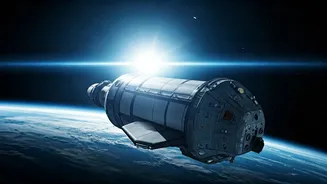
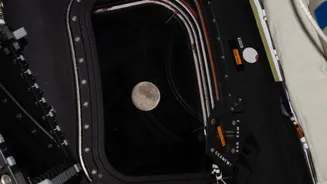
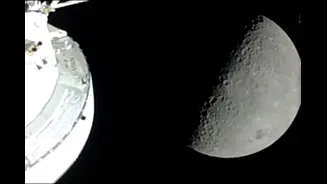
with Earth was temporarily severed. This wasn't a malfunction, but rather a natural consequence of the spacecraft's trajectory. As Orion rounded the far side of the Moon, its physical mass acted as an insurmountable barrier, blocking the direct line of sight required for radio signals to travel between the craft and Earth's control centers. This celestial alignment meant that both voice transmissions and crucial telemetry data could not be sent or received during this specific phase of the mission. The mission plan had meticulously accounted for this event, ensuring that the crew and the spacecraft were prepared to operate independently.
Autonomous Operations Unveiled
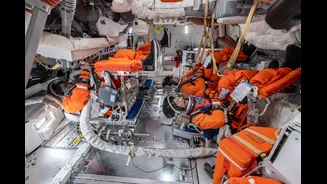
While Earth's ground control experienced a period of anxious silence, the astronauts onboard the Orion spacecraft were not idle; they followed precisely outlined procedures. The spacecraft itself relied on its sophisticated onboard autonomous systems to maintain navigation and control. This capability is a critical component of deep-space exploration, ensuring mission continuity even when direct communication is impossible. During this 40-minute window, Orion successfully completed its closest approach to the Moon, marking a significant achievement for the Artemis Program. This event not only showcased the resilience of the mission's technology but also highlighted the psychological aspect of human spaceflight, reminding everyone of the profound isolation experienced when venturing far beyond our home planet.
A Record-Breaking Journey
The Artemis II mission, launched on April 1st from the Kennedy Space Center in Florida using the powerful Space Launch System (SLS) rocket, represents a monumental leap in humanity's scientific and technological endeavors related to space exploration. This 10-day mission, with Commander Reid Wiseman, pilot Victor Glover, and mission specialists Christina Koch and Jeremy Hansen onboard, is designed to further the Artemis Program's ambitious goals of lunar exploration. A key highlight of their journey was reaching a staggering distance of over 252,000 miles from Earth, surpassing the previous human distance record set by Apollo 13 in 1970. This achievement underscores the program's commitment to pushing the boundaries of human reach into the cosmos and preparing for future deep-space missions.