





Booster's Triumphant Return
A significant advancement in spaceflight technology was recently marked as a rocket booster achieved its first successful landing after a launch. This
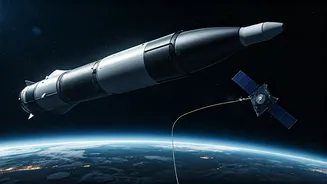
pioneering event, spearheaded by a private aerospace venture founded by a prominent entrepreneur, signifies a new era for reusable space technology. The booster detached from the main rocket approximately 10 minutes after liftoff, embarking on its descent back to Earth. This successful recovery demonstrates the feasibility and reliability of reusing rocket components, a critical step towards reducing the cost and increasing the frequency of space missions. The booster, affectionately nicknamed "Never Tell Me the Odds," referencing a memorable line from a beloved science fiction film, had previously completed a successful mission in November, setting the stage for this pivotal reuse attempt.
Mission Objectives & Payload
The primary objective of this flight was to rigorously test and validate the New Glenn rocket's capability for booster reusability, a crucial feature for remaining competitive in the burgeoning space industry. Beyond the technological demonstration, the mission also successfully transported a vital satellite into low-Earth orbit. This satellite, designated BlueBird 7, is a key component for a company focused on building a space-based cellular broadband network. The satellite itself represents the next generation of its company's constellation, boasting the largest commercial communications array ever deployed in low-Earth orbit. Its design allows for direct communication with standard smartphones, aligning with broader efforts to establish global internet connectivity from space, similar to initiatives by other major tech companies.
Future of Space Access
The successful landing of this reusable rocket booster has profound implications for the future of space exploration and access. Reusability is the cornerstone of making space missions more sustainable and economically viable. By recovering and refurbishing boosters, launch providers can significantly lower the cost of sending payloads to orbit, opening up possibilities for more frequent scientific research, commercial ventures, and even interplanetary travel. This achievement positions the involved companies at the forefront of this technological revolution, potentially accelerating the deployment of large satellite constellations and other ambitious space projects. The ultimate goal is to create a robust and accessible space infrastructure that benefits various sectors and advances human knowledge and connectivity.