




The Inevitable Fatigue
Elections are rarely decided by a solitary element; rather, they are the culmination of numerous forces interacting over an extended period. West Bengal,
with its substantial electorate of around six crore voters out of a total population of approximately ten crore, presents a complex picture where no single issue can fully account for the observed political transformation. Observations gathered from extensive travel across virtually every district over the past two years indicate a primary driver was a palpable sense of anti-incumbency sentiment against the Trinamool Congress government. After fifteen years in power, a natural weariness had set in among the populace. This phenomenon, akin to a law of nature, suggests that sustained governance eventually leads to a decline in public enthusiasm, paving the way for shifts in political allegiance. This fatigue, coupled with other emerging issues, began to reshape voter perspectives.
Local Power Structures
A consistent observation across numerous districts pointed towards the growing influence of local strongmen, often operating under political patronage. These figures, sometimes referred to as 'goons,' wielded considerable sway, frequently through intimidation tactics. This gradually fostered a climate of extortion, particularly within sectors like real estate. Activities ranging from sand and cement supply chains became integrated into a wider network of patronage. While this system provided livelihoods for some, it simultaneously established a coercive environment where ordinary citizens were compelled to pay 'cuts' not only to local political operatives but, in some instances, even to the police. Small party offices frequently transformed into hubs of local authority, with individuals acting as influential power brokers, a reality readily apparent on the ground. Even mundane activities, such as operating e-rickshaws, became entangled with informal payment structures, as many drivers, some lacking proper registration, paid local intermediaries to continue their work. Once these systems became entrenched, challenging them proved exceedingly difficult, leading to widespread endurance but also a growing, undeniable desire for liberation from such control.
Civic Disillusionment Peaks
Beyond the immediate political sphere, a significant undercurrent of disillusionment permeated sections of civil society, contributing to the electoral outcome. While not always overtly vocal, this sense of dissatisfaction was persistently present. This sentiment was closely intertwined with the detrimental impact of various education scam controversies, which considerably tarnished the government's public image. The RG Kar incident, in particular, amplified existing concerns, especially regarding women's safety. This issue held particular electoral weight, as women had historically formed one of Mamata Banerjee's most steadfast support bases. This strong allegiance was not spontaneous; it was cultivated over many years. Even during her tenure as Railway Minister, prior to becoming Chief Minister, she had implemented measures beneficial to working-class women, particularly those commuting daily for domestic employment. Later, as Chief Minister, initiatives like health coverage schemes registered in women's names, travel allowances for patients, and direct financial aid such as the Lakshmir Bhandar program, which provided ₹1,500 monthly, had successfully solidified this demographic's support. However, a noticeable erosion of this base was evident in the recent elections.
Campaign Dynamics Evolve
The erosion of the women's vote can be attributed, in part, to a strategic counter-campaign spearheaded by Narendra Modi, who possesses significant appeal among female voters nationwide. High-profile incidents amplified issues of safety, weakening the previously consolidated support. Modi effectively highlighted women's security and importantly, pledged ₹3,000 per month for women, a promise absent in prior campaigns. In a notable shift from 2021, when he had opposed such welfare schemes, deeming them detrimental to employment, the BJP implicitly acknowledged the misstep and subtly altered its approach. This demonstrated the party's flexibility in adopting successful strategies when politically advantageous. Furthermore, the opposition's emphasis on law and order, or more accurately, its deterioration, emerged as a critical factor. Violence perpetrated by individuals affiliated with the TMC saw a marked increase, particularly in the run-up to elections. This pattern of political violence had a historical precedent in Bengal, with strongmen migrating from the Congress to the CPM, and subsequently to the TMC as power shifted. Consequently, the TMC inherited and amplified a culture of coercion that previous governments had also relied upon, contributing to public dissatisfaction.
Shifting Urban Allegiances
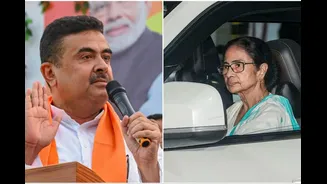
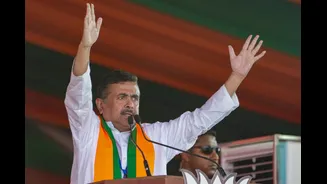
A significant demographic shift occurred with the urban, educated middle class, often referred to as the 'bhadralok.' Historically aligned with the Congress, this group had gravitated towards the Left during the Singur and Nandigram agitations, a sentiment Mamata Banerjee had skillfully channeled into her political movement. However, over time, and particularly following industrial setbacks such as the departure of the Tata project from the state, confidence in her administration began to wane. This decline in faith was observable even in constituencies like Bhawanipur, a cosmopolitan, elite, and politically significant seat that had previously been represented by prominent leaders such as Syama Prasad Mukherjee and Siddhartha Shankar Ray. The emergence of Suvendu Adhikari as a credible and effective face for the BJP also played a crucial role. Despite lacking an elite urban background, he succeeded in consolidating Hindu votes, presenting a strong alternative.
Religious Polarization Impact
Religious polarization emerged as another pivotal factor influencing the electoral landscape. While Muslim voters had traditionally been strong supporters of Mamata Banerjee, and this allegiance was largely expected to continue amidst anxieties regarding national politics under Modi and Amit Shah, the BJP's campaign significantly intensified polarization. Through aggressive labeling and pointed narratives, the party framed certain issues in a manner that resonated with a segment of the electorate. In response, Mamata attempted a balancing act by engaging in visible religious outreach, including temple visits and the invocation of cultural symbols. However, these gestures did not entirely counteract the BJP's framing. The party successfully consolidated a substantial portion of Hindu voters. Moreover, a prevalent perception, particularly in urban areas, was that the state government had been excessively accommodating towards certain communities, even at the expense of law and order. Regardless of its factual accuracy, this perception had tangible electoral consequences. Symbolic issues, such as the state's involvement in temple affairs, became focal points that fed into the broader narrative, contributing to the widening divide.
Structural and Procedural Elements
Finally, structural elements also played a discernible role in shaping the electoral outcomes. Processes such as voter list revisions, known within political circles as SIR, were perceived by the BJP as having influenced results, particularly in districts situated along border regions. These procedural aspects, when combined with the other contributing factors, likely amplified the translation of the described shifts into votes. Ultimately, it was not a single overwhelming force but rather a confluence of multiple currents that reshaped the electoral map of West Bengal. Anti-incumbency, organizational weariness, evolving voter loyalties, identity politics, and sophisticated campaigning strategies all converged to alter the political landscape. Mamata Banerjee's electoral setback was not due to a singular misjudgment but the cumulative impact of various gradual and sudden changes that collectively influenced the final result.