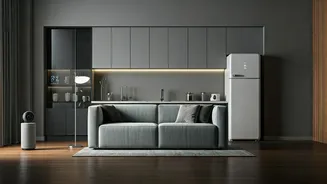

Smart Lighting Systems
Smart lighting systems are a cornerstone of any modern smart home setup. These systems often consist of smart bulbs, smart switches, and dimmers that you
can control remotely via a smartphone app or voice commands. The key benefit of these systems is the ability to customize your lighting based on your needs and preferences. For instance, you could set up schedules to turn lights on and off automatically, simulating occupancy while you're away. Furthermore, smart lighting can be integrated with other smart home devices. Imagine your lights automatically dimming when you start watching a movie or brightening when your smart security system detects motion. Many systems also offer color-changing capabilities, allowing you to create different ambiances for various occasions. Beyond convenience, smart lighting can also help you save on energy bills. By using LED smart bulbs and setting up efficient schedules, you can minimize unnecessary energy consumption. Furthermore, the ability to control lights remotely means you'll never have to worry about leaving the lights on again.
Intelligent Thermostats
Smart thermostats are designed to learn your heating and cooling preferences, automatically adjusting the temperature to optimize both comfort and energy efficiency. Unlike traditional thermostats, these devices connect to your home Wi-Fi and allow you to control your home's climate from your smartphone, tablet, or even with voice commands via virtual assistants like Amazon Alexa or Google Assistant. The key advantage lies in their learning capabilities. Smart thermostats analyze your daily routines and adjust the temperature accordingly. For instance, if you're typically away from home during the day, the thermostat can automatically lower the temperature to conserve energy. When you're on your way home, you can remotely raise the temperature, ensuring a comfortable environment upon your arrival. These devices also offer features such as geofencing, which uses your phone's location to automatically adjust the temperature when you leave or return home. Additionally, they often provide detailed energy usage reports, giving you insights into your consumption patterns and helping you identify areas for improvement. Investing in a smart thermostat not only increases your comfort but also leads to potential savings on your energy bills.
Smart Security Cameras
Smart security cameras provide an extra layer of protection for your home, offering features that traditional security systems often lack. These cameras typically connect to your home Wi-Fi and can be controlled remotely via a smartphone app. They usually include features such as motion detection, real-time video streaming, and two-way audio. If motion is detected, the camera can send instant notifications to your phone, allowing you to check the live feed and assess the situation. Most models come equipped with night vision, ensuring you can monitor your property even in low-light conditions. Many smart security cameras also offer cloud storage options, so you can review recorded footage anytime, anywhere. Two-way audio allows you to communicate with visitors, delivery personnel, or even potential intruders, adding another layer of security. Some advanced cameras integrate with other smart home devices, allowing them to trigger actions like turning on lights or sounding an alarm when motion is detected. Smart security cameras offer peace of mind, allowing you to keep an eye on your home, whether you're at work, on vacation, or simply in another room.
Smart Door Locks
Smart door locks provide a keyless entry solution that boosts the security and convenience of your home. These locks typically replace your traditional deadbolt and can be controlled through a smartphone app or a keypad. Smart locks allow you to lock and unlock your door remotely, making it easier to grant access to guests or service providers, even when you're not home. A major advantage of smart locks is the ability to create and manage digital keys. You can issue temporary or permanent access codes to family members, friends, or service providers, and you can also track who enters and exits your home. Smart locks often integrate with other smart home devices and systems, such as smart security systems. Some models offer features like automatic locking and unlocking, where the door locks automatically when you leave and unlocks when you approach. Many smart locks also provide activity logs, giving you a detailed history of who has entered your home and when. Smart door locks add a layer of security, convenience, and control that surpasses traditional locks, providing a more modern and efficient way to manage home access.
Smart Home Hubs
A smart home hub acts as the central control unit for all your smart home devices, consolidating their management into a single platform. These hubs connect to your home Wi-Fi and communicate with your various smart devices, allowing you to control and automate them from one place, usually a smartphone app or voice assistant. A smart home hub supports different communication protocols like Wi-Fi, Bluetooth, Zigbee, and Z-Wave, ensuring compatibility with a wide range of devices. This allows you to integrate lights, thermostats, security systems, and other gadgets, creating a unified smart home experience. A major benefit of a smart home hub is its ability to create scenes and automations. For instance, you could set up a “goodnight” scene that turns off lights, locks doors, and adjusts the thermostat all at once. Or, you could create an automation that turns on the lights when your security system detects motion. Moreover, smart home hubs improve the reliability and responsiveness of your smart devices by centralizing communication. By consolidating all your smart home devices through a single hub, you streamline control, increase efficiency, and enable advanced automation capabilities.