
Surfers, Swimmers Targeted
The coastal waters near Sydney saw a surge of shark attacks, triggering significant concern among locals and authorities alike. The incidents happened
across various beaches and involved both surfers and swimmers. One critical attack took place off the coast of New South Wales’ Limeburners Creek National Park, where a 39-year-old surfer suffered critical injuries. Further north, a surfer in his 20s was bitten at North Steyne Beach, and a 12-year-old boy was severely injured at Shark Beach after jumping from a ledge. Authorities suspect bull sharks were responsible for some of these attacks, noting that heavy rainfall had increased murky freshwater flow, which is known to attract these sharks. This increase in shark activity led to the activation of drone surveillance and lifeguard teams in some areas, highlighting the severity of the situation and the measures being implemented.
Multiple Attack Locations
The shark incidents occurred across multiple locations, amplifying the widespread impact. One attack was reported in the Limeburners Creek National Park. Another took place at North Steyne Beach, where a surfer was critically injured. Inside Sydney Harbour, at Shark Beach in the suburb of Vaucluse, a 12-year-old boy was attacked while jumping from a six-meter ledge. Additionally, an 11-year-old boy had his surfboard bitten at Dee Why Beach, narrowly escaping harm. The diverse locations of these attacks underscore the urgent need for a city-wide safety response. This also highlights how quickly the situation can change, as attacks appeared in both familiar and more remote beach areas. The various locations also made it difficult to determine patterns, further complicating the response strategy.
Emergency Responses Defined
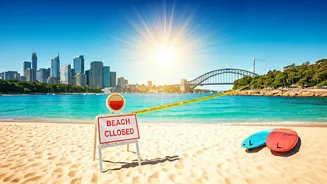
After the shark attacks, the authorities took immediate and decisive actions. Many beaches, including the northern beaches of Sydney, such as North Steyne and Dee Why, were immediately shut down. The Surf Life Saving NSW chief executive, Steven Pearce, issued a clear warning to beachgoers, advising them to stay out of the water. Surf Life Saving NSW also deployed drone surveillance and lifeguard teams to monitor the area. In an Instagram post, the Port Macquarie Australian Lifeguard Service announced the closure of beaches between Town Beach and Crescent Head. These responses were aimed at ensuring immediate public safety and included preventative actions such as beach closures and public advisories, showing how authorities were managing the crisis.
Injuries and Outcomes
The incidents left several people injured, highlighting the dangers lurking in the water. The 39-year-old surfer critically injured off Limeburners Creek National Park suffered severe injuries. The surfer at North Steyne Beach was pulled from the water by bystanders and rushed to the hospital in critical condition. At Shark Beach, a 12-year-old boy sustained significant injuries to both legs but was saved by friends. Although an 11-year-old boy escaped uninjured at Dee Why Beach after a shark bit his surfboard, the damage revealed the potential risk. The severity of the injuries underscores the potential risks associated with shark encounters. Authorities are now focused on protecting the public and preventing further incidents.
Authorities' Cautions
Authorities urged the public to exercise caution and avoid swimming in the ocean following the series of shark attacks. NSW police noted that heavy rainfall likely increased the presence of bull sharks in Sydney Harbour, elevating the risk of attack. One official recommended that people go to local pools as a safer alternative. The authorities’ safety directives show a proactive approach to prevent further incidents. They also communicated that, with two individuals critically injured and one other escaping narrowly from harm, beaches were deemed unsafe. The advice, coupled with beach closures, reflected a commitment to ensuring public well-being during a hazardous period, emphasizing immediate caution and long-term awareness.