






AI's Global Footprint
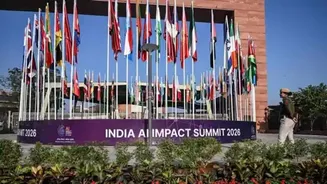
The Artificial Intelligence Impact Summit in New Delhi marked a significant moment for India's standing on the world stage, particularly amidst the rapidly
evolving landscape of geopolitics, defense, and global commerce. This large-scale event, attended by delegations from over 70 countries and drawing more than 200,000 participants, underscored India's expanding role in emerging technologies. The summit coincided with a developing interim trade agreement between India and the United States, highlighting a growing synergy between the two nations. Krystle Veda Kaul, a former senior US AI official, characterized the summit as India's "big AI pickup moment," emphasizing the increasing strategic alignment between Washington and New Delhi. The timing of this event is particularly crucial as we approach 2026, with frameworks like ISEC fostering significant US investment, exceeding $16 billion, in India, particularly in defense, strategic technology, telecommunications, and AI. Collaborations, such as those between Columbia University and Indian Institutes of Technology (IITs) for AI research centers, showcase India's burgeoning position as a hub for AI talent and innovation, solidifying its importance in the global AI ecosystem.
Ethical Data Governance
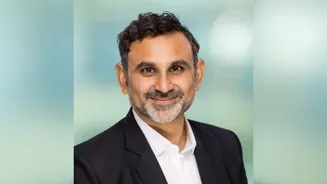
As artificial intelligence becomes more integrated into governmental and military operations worldwide, Krystle Veda Kaul offers a crucial perspective: the true risks associated with AI lie not in the technology itself, but in how data is managed and governed. Drawing from her extensive experience with US intelligence agencies, including the National Reconnaissance Office, she asserts that the foundation of ethical AI is fundamentally rooted in ethical data practices. This principle becomes particularly critical when dealing with personally identifiable information, sensitive, or classified datasets. Kaul emphasizes that robust regulation of data is paramount, explaining the inherent caution observed by defense and intelligence bodies globally when considering the full-scale integration of AI into their core functions. Her insights highlight that while AI tools offer immense potential, their responsible deployment hinges on stringent data security and ethical handling protocols.
AI in Warfare
The application of artificial intelligence is already making its mark on the modern battlefield and in the complex realm of information warfare. Krystle Veda Kaul, who previously managed disinformation campaigns at the Pentagon before the advent of sophisticated AI systems, points out that AI can dramatically improve analytical and response capabilities. However, she strongly advocates for maintaining human oversight, emphasizing that AI should augment, not replace, human judgment, especially in critical national security contexts. Kaul recalls a time when her team analyzed approximately 4,000 intelligence reports daily by hand, illustrating the potential for AI to significantly enhance such processes. Her core message is that while AI can serve as a powerful enhancer, a human operator must always remain in the decision-making loop, particularly when vital national security choices are on the line, ensuring accountability and strategic nuance.
Global Alliances & Safeguards
In the face of rapid advancements in AI by nations like China, democratic countries face limitations in controlling authoritarian regimes. Krystle Veda Kaul suggests that the most effective strategy for democratic nations is to concentrate on fortifying their own internal safeguards and strengthening their alliances. The approach, she argues, involves steadfastly upholding one's own values, principles, and ethical standards while simultaneously working to mitigate the risks posed by adversarial nations. This focus on internal strength and collaborative partnerships is essential for navigating the complex geopolitical landscape shaped by emerging technologies. Kaul believes that AI could become a pivotal factor in deepening the ties between democracies like the US and India, given their shared concerns and the potential for AI to drive collaboration and mutual security in an increasingly competitive global environment.