
A Second Departure
The United States, under the leadership of former President Donald Trump, officially withdrew from the Paris Climate Agreement for the second time. This
move, announced in January, positioned America alongside Iran, Libya, and Yemen as the sole nations outside the global climate pact. The timing of the withdrawal was particularly striking, occurring amidst escalating global challenges, including record-breaking temperatures, intensifying natural disasters, and mounting economic repercussions linked to the climate crisis. Simultaneously, the White House also declared its intention to exit the UN Framework Convention on Climate Change, which underpinned the adoption of the Paris Agreement, further solidifying the United States' isolation from international climate efforts.
Global Ramifications Emerge
The US's departure from the Paris Agreement poses a risk of marginalizing America in global climate efforts. Concerns grew that it might hinder the progress being made elsewhere. This decision also reinforced perceptions of unreliability on the international stage. Conversely, the withdrawal spurred some nations to adopt more ambitious measures. At the COP30 talks in Brazil, for example, Colombia and the Netherlands, in partnership with Pacific Island nations, unveiled plans to host the inaugural international discussions focused on phasing out fossil fuels. While the US exit complicates international climate efforts, it has not halted progress entirely, as investments in low-carbon energy continue to outpace spending on fossil fuels globally.
Renewable Energy's Ascent
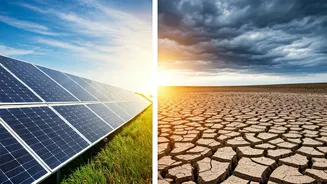
Despite the US withdrawal, the trajectory of renewable energy continues its upward climb. Renewable sources accounted for over 90% of new power generation capacity last year, and they now represent the most cost-effective option for new electricity in much of the world. This trend suggests that even without the full participation of the United States, the global shift towards cleaner energy sources is advancing steadily. The market dynamics and technological advancements are making renewable energy increasingly competitive, demonstrating the resilience of the global push for sustainable solutions. This momentum, driven by economic factors and environmental imperatives, points to a future where clean energy plays a dominant role, regardless of shifts in political stance in certain nations.
China's Expanding Influence
China is emerging as a significant player in the green transition. Though it remains the world’s largest consumer of coal, China's clean energy sector has expanded its influence. The country's emissions appear to have peaked last year. Its clean energy sector now controls critical supply chains, including over 80% of the world's solar panels and approximately 70% of wind turbines, indicating its global leadership. However, experts warn that America’s climate abdication may actually slow China’s ambitions. In September, China pledged to cut greenhouse gas emissions by 7-10% within a decade—a target widely criticized as insufficient. The growth of China’s green energy sector and its potential impact on the global energy landscape highlight the complex interplay of economic interests and environmental commitments.
Leadership Vacuums
The United States' departure leaves a void in global climate leadership. While the US's actions may slow down global efforts, the rise of China and other nations indicates that the climate agenda is moving forward. It remains to be seen how other countries, organizations, and the private sector will fill the leadership vacuum left by the United States. This situation presents both challenges and opportunities for the world to unite and accelerate the transition to a low-carbon economy. This shift underscores the need for continued investment in renewable energy technologies, international cooperation, and policy changes to drive meaningful and lasting changes in addressing the climate crisis.